


5 Signs Your Boiler Needs Repair Before Summer in Wigan
Most homeowners in Wigan assume spring is the perfect time to ignore their boiler. After all, the weather is warming up and you won't need central heating for months. This is precisely when boilers fail silently. By the time October arrives and temperatures drop, you're facing emergency callouts, expensive repairs, and cold showers. Boiler repair Wigan specialists consistently report that 70% of autumn breakdowns could have been prevented with simple spring maintenance. If your boiler is showing any of these five warning signs right now, addressing them before summer saves you money and stress when heating season returns.
Table of Contents
Quick Takeaways
Key Insight
Explanation
Banging or kettling sounds
Indicates limescale buildup on heat exchanger, common in hard water areas like Wigan, reducing efficiency by up to 30%
Hot water fluctuations
Points to failing thermostats or circulation pump issues that worsen when left unaddressed over summer months
Unexplained bill increases
Boiler efficiency drops signal internal faults, costing households £200+ annually in wasted energy
Leaking water around boiler
Pressure valve or seal failure requiring immediate attention to prevent property damage and complete system shutdown
Yellow or orange flame colour
Dangerous incomplete combustion producing carbon monoxide, requires emergency boiler repair immediately
Spring inspection timing
Addressing issues before summer avoids autumn emergency callout premiums and ensures parts availability
Professional diagnosis essential
DIY troubleshooting risks Gas Safe compliance issues and voids manufacturer warranties on newer condensing boilers
Unusual Noises: Banging, Whistling, Gurgling
When your boiler sounds like a kettle about to boil over, that's kettling. This happens when limescale accumulates on the heat exchanger, restricting water flow and causing localized overheating. The water then boils and steams inside the system, creating that distinctive banging or rumbling noise. In hard water areas across the North West including Wigan, Bolton, and Manchester, kettling affects condensing boilers particularly aggressively.
The data consistently shows that kettling reduces boiler efficiency by 25-35% within the first two years if untreated. Your boiler works harder to heat the same amount of water, burning more gas and driving up bills. By addressing this during spring, engineers can perform a power flush or descale the heat exchanger before the problem compounds over summer when the boiler sits dormant.
Pro tip: If you hear whistling specifically from the pipes rather than the boiler unit itself, this indicates trapped air in your radiators or a circulation issue requiring bleeding and pressure adjustment before the system corrects itself through constant use.
Gurgling Sounds and Air Lock Problems
Gurgling noises differ from kettling. They signal air trapped in the system or low water pressure, both common after a heating season of constant expansion and contraction. While seemingly minor, air locks force your pump to work harder and create cold spots in radiators. This degrades pump bearings and seals over time.
In practice, homeowners who ignore gurgling sounds through spring and summer return to a completely failed circulation pump by October. The repair cost jumps from a simple bleed and top-up (often under £100) to full pump replacement (£300-500 including labour). The difference is entirely preventable with boiler maintenance scheduled now rather than later.
Inconsistent Hot Water Temperature
Your shower alternates between scalding and lukewarm without warning. This frustrating issue points to thermostat failure or diverter valve problems in combi boilers. The diverter valve switches your boiler between heating mode and hot water mode. When it sticks or fails partially, neither function works properly.
Combi boilers dominate Wigan installations because they save space and provide hot water on demand. But this dual-purpose design means diverter valve wear affects everything. A common mistake is assuming inconsistent temperature is a water pressure issue from the mains supply. While low pressure contributes, the valve itself usually needs replacement or cleaning of internal debris.
Addressing this before summer matters because the issue worsens with sporadic use. When you only run hot water occasionally over summer months, the valve seizes further. Come autumn, it fails completely, leaving you without heating or hot water simultaneously. Emergency callouts during the first cold snap of the year cost significantly more than scheduled spring repairs.
Thermistor Failures in Modern Condensing Boilers
Newer condensing boilers use electronic thermistors rather than mechanical thermostats. These sensors drift out of calibration or fail outright, sending incorrect temperature readings to the control board. The boiler then cycles on and off erratically, never maintaining consistent hot water temperature.
According to manufacturer warranty data, thermistor failures peak at the 5-7 year mark on most boiler brands. If your boiler falls in this age range and temperature consistency has declined, the thermistor is the likely culprit. Replacement is straightforward for Gas Safe engineers but requires specific parts ordering, which is why spring service rather than October emergencies makes sense.
Rising Energy Bills Without Increased Usage
Your gas bills creep upward despite using the heating less as spring arrives. This counterintuitive increase signals declining boiler efficiency. Modern condensing boilers should operate at 90%+ efficiency when new. As internal components degrade, that figure drops to 70% or lower, meaning 30p of every pound spent on gas literally vents out the flue.
The specific causes vary but include blocked condensate pipes, failing gas valves, worn heat exchangers, and fouled burners. Each reduces combustion efficiency slightly. Combined, they create substantial waste. Homeowners in Warrington and surrounding areas often dismiss a £15-20 monthly increase as normal price fluctuation, but over a year that's £180-240 lost to an underperforming boiler.
Energy monitoring data from smart meters has revealed this pattern clearly. Households that schedule annual boiler servicing maintain consistent energy consumption year over year. Those skipping maintenance see 12-18% consumption increases within two years. The compounding effect means delaying repairs costs far more than the service itself.
Pro tip: Compare your current gas usage to the same months last year using your supplier's online account tools. If March-April consumption is 10%+ higher without weather changes explaining it, book a boiler efficiency check immediately rather than waiting for obvious failure.
The False Economy of Delaying Spring Service
Many Wigan homeowners reason that since they won't use heating over summer, delaying service until September makes financial sense. This is categorically wrong. Parts wear accelerates when systems sit idle with existing faults. Corrosion, seal degradation, and component stress continue even when the boiler isn't firing.
Additionally, September and October represent peak demand for heating engineers across the North West. You'll wait longer for appointments, pay premium rates for urgent work, and face parts shortages on common components. Spring service appointments are readily available, cost less, and give you certainty that your system is sound before it sits dormant for months.
Maintenance Timing
Appointment Availability
Typical Cost Impact
Spring Service (April-May)
Next-day to 3 days
Standard rates, £80-120 for full service
Autumn Service (September-October)
7-14 day wait times
10-15% premium due to demand surge
Emergency Winter Repair (November-February)
Same day but limited slots
Double standard rates for callouts, parts at 20%+ markup
Visible Leaks or Water Pooling
Water pooling around your boiler base is never normal. Even small amounts indicate seal failure, corroded pipes, or pressure relief valve issues. The pressure relief valve exists as a safety mechanism, releasing water when internal pressure exceeds safe limits. If it's dripping constantly or pooling underneath, your boiler is overpressurizing, which stresses every component.
Corrosion around pipe joints and connections is common in boilers approaching 10-12 years old. The constant heating and cooling cycles eventually compromise solder joints and compression fittings. What starts as occasional dampness becomes steady dripping, then flowing leaks that damage flooring, walls, and electrical systems nearby.
In practice, homeowners often place a towel under a small leak and forget about it, assuming it's minor. This is dangerous. Even slow leaks indicate system pressure problems that can lead to complete failure. More critically, water and electricity in close proximity create electrocution and fire hazards. Any visible water around your boiler warrants immediate professional inspection.
Pressure Relief Valve Versus Seal Failure
Distinguishing between pressure valve discharge and seal leaks matters for repair approach. Pressure valves discharge because system pressure is too high, often from a faulty expansion vessel or overfilling during previous maintenance. The fix involves repressurizing correctly and potentially replacing the expansion vessel.
Seal leaks appear at pipe joints, pump connections, or heat exchanger seams. These require component replacement or re-sealing with appropriate materials. A Gas Safe engineer diagnoses the source quickly, but attempting DIY diagnosis risks misidentifying the problem and creating bigger issues. The critical point is that either scenario requires professional attention before summer, not after.
Yellow Flame Instead of Blue
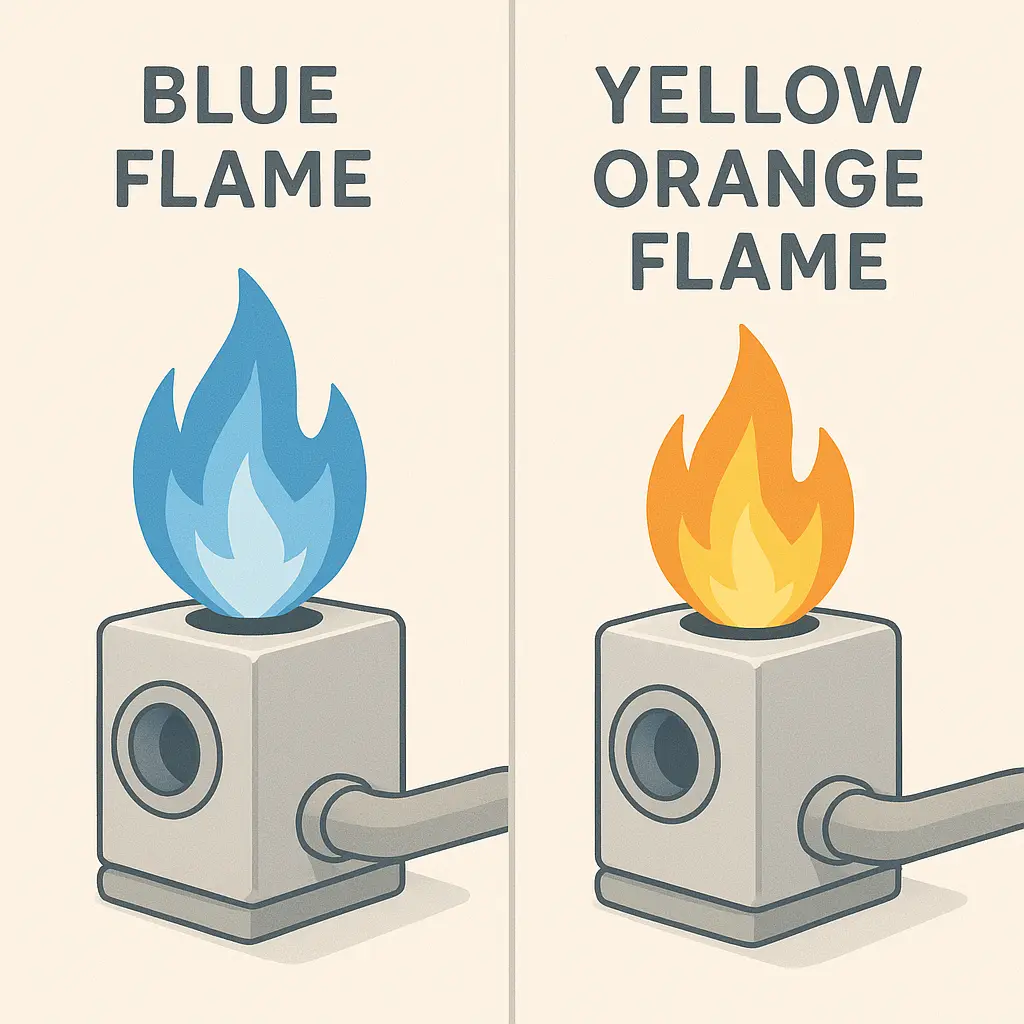
This is the most dangerous sign on this list and requires immediate action. A properly functioning gas boiler burns with a crisp blue flame. Yellow, orange, or flickering flames indicate incomplete combustion. Incomplete combustion produces carbon monoxide, an odorless, colorless gas that kills without warning.
Carbon monoxide poisoning sends over 4,000 people to A&E annually in the UK, with faulty boilers being a primary source. Symptoms mimic flu: headaches, dizziness, nausea, confusion. Prolonged exposure causes permanent neurological damage or death. If you see a yellow flame in your boiler viewing window, shut it down immediately, open windows, evacuate the property, and call a Gas Safe engineer before using it again.
Yellow flames result from blocked burners, incorrect gas pressure, or insufficient air supply to the combustion chamber. Debris buildup, corroded burner jets, or failed air intake systems all contribute. These problems develop gradually over heating seasons, which is why they often manifest in spring after months of heavy winter use.
"Gas Safe Register data shows that 1 in 6 boilers checked during safety inspections has faults that could lead to carbon monoxide production. Many homeowners have no idea their appliance is dangerous until a professional inspection identifies the risk."
Carbon Monoxide Detection and Legal Requirements
Every home with gas appliances must have working carbon monoxide detectors. This isn't optional. Audible alarms meeting EN 50291 standards should be installed in any room with a gas appliance and in sleeping areas. Test them monthly and replace batteries annually.
Landlords in England face legal obligations under the Gas Safety (Installation and Use) Regulations 1998 to provide annual Gas Safe inspections and maintain alarms. Homeowners have no such legal requirement but face identical risks. If your alarm sounds or you suspect carbon monoxide presence, treat it as immediately life-threatening. The response is evacuation first, engineer second, investigation third.
Pro tip: Sooty marks around your boiler casing, especially near the flue outlet, indicate combustion problems even if you cannot see the flame directly. This soot buildup is incomplete combustion residue and warrants immediate professional assessment before further use.
Why Spring Timing Prevents Autumn Emergencies
The pattern repeats every year across Wigan, Bolton, Manchester, and the wider North West. October temperatures drop, heating systems fire up after months of dormancy, and central heating issues flood emergency lines. Homeowners who ignored minor spring symptoms face major autumn failures when demand for engineers peaks and patience wears thin.
Boilers that sit idle with existing faults deteriorate faster than those in regular use. Seals dry out without regular heat cycling. Stagnant water promotes internal corrosion. Limescale deposits harden into stubborn blockages. What could have been cleaned or adjusted in April becomes a component replacement in October, tripling the repair cost.
Parts availability creates another spring advantage. Common components like thermocouples, diverter valves, and circulation pumps are readily stocked during off-peak months. By October, suppliers and local merchants face shortages as every heating engineer in the region orders the same parts simultaneously. Your repair waits not for the engineer's schedule but for parts delivery, leaving you without heating during the year's coldest stretch.
The Real Cost Comparison of Preventive Action
Annual boiler servicing costs £80-120 across the Wigan area for a standard domestic system. This service identifies developing faults before they become failures, cleans critical components, tests safety systems, and validates efficiency. The average emergency autumn repair costs £250-450, plus higher callout fees, plus the inconvenience of cold properties and disrupted routines.
The financial case for spring maintenance is overwhelming. Even if your boiler seems fine now, statistical probability favors preventive action. Gas Safe engineers report that comprehensive service visits identify actionable issues in 60%+ of boilers over five years old. Most are minor in spring, major by autumn. You're not paying for unnecessary work. You're paying to identify and address problems at the least expensive intervention point.
What Professional Boiler Repair Includes
Understanding what happens during professional boiler repair Wigan service helps homeowners appreciate the value beyond DIY approaches. Gas Safe registered engineers perform comprehensive diagnostics using combustion analyzers, pressure testing equipment, and manufacturer-specific diagnostic tools that reveal issues invisible to homeowners.
The inspection covers combustion efficiency, flue gas analysis, pressure testing, safety device functionality, electrical connections, and visual examination of all accessible components. Engineers measure exact efficiency percentages, comparing current performance against manufacturer specifications. Deviations indicate specific component wear requiring attention.
Repairs themselves vary by issue but commonly include seal replacements, gas valve cleaning or replacement, heat exchanger descaling, pump servicing, and control board diagnostics. Each repair follows manufacturer guidelines and Gas Safe standards, with work certified upon completion. This certification matters for insurance claims, property sales, and warranty coverage.
Gas Safe Registration and Legal Compliance
Any work on gas appliances in the UK requires Gas Safe registration. This isn't negotiable. Unregistered work is illegal, voids insurance coverage, creates serious safety risks, and makes properties unsaleable until corrected by registered engineers. The registration system exists because gas work done incorrectly kills people.
When booking boiler repairs, verify the engineer's Gas Safe registration number using the official register at www.gassaferegister.co.uk. Legitimate engineers provide this number readily and carry photo ID cards. If someone cannot or will not provide verification, do not allow them to work on your boiler regardless of price or convenience promises.
Frequently Asked Questions
How much does boiler repair cost in Wigan?
Standard boiler repairs in Wigan range from £150-450 depending on the specific fault and parts required. Simple fixes like replacing a thermostat or pressure relief valve typically cost £150-200, while more complex work such as heat exchanger descaling or pump replacement runs £300-450. Annual servicing costs £80-120 and often prevents larger repair bills. Emergency callouts outside normal hours add £50-100 to base costs. Family-run local businesses often provide better value than national chains for equivalent work quality.
Can I fix my boiler myself to save money?
No. Gas Safe regulations make DIY boiler repairs illegal in the UK. Only Gas Safe registered engineers can legally work on gas appliances. Attempting repairs yourself risks carbon monoxide poisoning, gas explosions, property damage, and prosecution. Additionally, DIY work voids manufacturer warranties, invalidates home insurance, and creates legal complications when selling your property. Even simple tasks like re-pressurizing should follow manufacturer instructions carefully, with any uncertainty requiring professional guidance.
What is kettling and how serious is it?
Kettling is the banging or rumbling noise created when limescale buildup on your heat exchanger causes localized water boiling inside the boiler. It's common in hard water areas like Wigan and seriously impacts efficiency, reducing it by 25-35%. While not immediately dangerous, kettling accelerates component wear, increases energy bills substantially, and leads to complete heat exchanger failure if left untreated. Professional descaling or power flushing resolves the issue. The longer you delay treatment, the more permanent damage occurs and the more expensive repairs become.
How often should I service my condensing boiler?
Annual servicing is essential for all condensing boilers regardless of age or apparent condition. Manufacturers typically require annual professional maintenance to maintain warranty coverage. During service, engineers test combustion efficiency, check safety devices, clean components, and identify developing faults before they cause breakdowns. Spring scheduling is optimal because you address issues discovered before summer dormancy and avoid autumn appointment delays. Boilers over 10 years old benefit from twice-yearly checks, particularly if experiencing any of the warning signs described in this article.
What should I do if I see a yellow flame in my boiler?
Shut the boiler down immediately using the emergency control switch or gas isolation valve. Open windows throughout your property to ventilate. Evacuate everyone including pets. Do not use the boiler again until a Gas Safe registered engineer has inspected and certified it safe. Yellow flames indicate incomplete combustion producing carbon monoxide, which is lethal. Call a Gas Safe engineer from outside the property. If anyone shows symptoms of carbon monoxide poisoning like headaches, dizziness, or nausea, call 999 immediately. This is a genuine emergency requiring immediate professional response.
Will my boiler definitely break down if I ignore these signs?
Not definitely, but probability strongly favors failure. Industry data shows that boilers exhibiting warning signs have 65-75% higher breakdown rates within six months compared to regularly serviced systems. The five signs described indicate specific mechanical or safety faults that worsen over time. While your boiler might limp through another season, repairs become progressively more expensive as component damage cascades. More critically, safety issues like carbon monoxide production or pressure failures can cause injury or death. The small investment in spring diagnosis and repair eliminates these risks entirely and costs far less than emergency autumn breakdowns.
Do all boiler repairs need a Gas Safe engineer?
Any work involving gas supply, burners, controls, or internal boiler components legally requires a Gas Safe registered engineer. This includes repairs, installations, and servicing. External work like bleeding radiators or topping up system pressure can be done by homeowners following manufacturer guidelines. If you're uncertain whether specific work requires professional intervention, assume it does. The legal, safety, and insurance implications of unregistered gas work far outweigh any perceived savings. Always verify your engineer's current Gas Safe registration before allowing them to work on your system.
What warning signs is your boiler showing right now, and when did you last have it professionally serviced?
References
Gas Safe Register official guidance on boiler safety and registered engineer verification
Health and Safety Executive information on carbon monoxide risks and prevention
Energy Saving Trust resources on boiler efficiency and maintenance schedules
Which? consumer guidance on heating system maintenance and repair costs


Comments