


Cold Radiators Upstairs? Here's What's Wrong
- Michael Beresford
- Aug 12
- 12 min read
If your upstairs radiators are stone cold while the boiler is running, your heating system is not being dramatic. It is telling you something specific is wrong, and ignoring it will cost you more money every single month. Cold radiators in Wigan, Leigh, and across the North West are one of the most common callouts our engineers deal with, especially as the temperature drops. The causes range from something you can fix yourself in ten minutes to a system fault that needs a qualified engineer. This guide walks you through every likely cause, in order of likelihood, so you stop guessing and start fixing.
Table of Contents
Quick Takeaways
Key Insight
Explanation
Bleed before you do anything else
Trapped air is the most common reason upstairs radiators fail to heat. It takes under ten minutes and costs nothing.
Cold at the bottom means sludge, not air
If the top of the radiator is warm but the bottom stays cold, magnetite sludge has settled there and is blocking circulation.
System imbalance sends heat upstairs first
Hot water rises. If downstairs radiators get cold before upstairs ones do, your system needs balancing, not bleeding.
A stuck TRV pin stops all flow
Thermostatic Radiator Valve pins can seize in the closed position after summer. One stuck pin makes the whole radiator cold.
Low boiler pressure prevents circulation
Most combi boilers need pressure between 1 and 1.5 bar. Below 1 bar, water may not reach upper-floor radiators reliably.
Power flushing is needed for persistent cold spots
If bleeding does not solve cold bottoms across multiple radiators, a power flush removes sludge that simple bleeding cannot shift.
Ball valve blockage affects open-vented systems
On older open-vented systems, a blocked ball valve in the header tank is a direct cause of cold radiators upstairs.
Why Upstairs Radiators Go Cold First
The physics of a central heating system work against your upper floor. Hot water rises, which sounds like it should help upstairs radiators, but in a poorly balanced or partially blocked system, the water follows the path of least resistance. That path is almost always the ground floor pipework, because it is closer to the boiler and the pump has less work to do to push water through it.
In practice, what this means is that when something starts to go wrong, whether it is air, sludge, a failing pump, or low pressure, the upstairs rooms are the first to notice. The downstairs may still feel acceptably warm while the bedrooms are freezing. This is not a sign that the problem is minor. It is a sign that the problem has been developing for a while and you are now seeing the consequence of it.
Understanding which floor is cold and where exactly on the radiator the cold spot sits is the fastest way to diagnose the real fault. A radiator that is cold at the top points to trapped air. One that is cold at the bottom points to sludge. One that is cold all over points to a valve, pressure, or pump issue. Start there before you call anyone.
Trapped Air and Bleeding: The First Thing to Check
Air gets into central heating systems through several routes: refilling after a drain-down, a small leak that has drawn in air over time, or simply normal system operation. Once air is inside, it rises to the highest points in the system, which is why upstairs radiators and the tops of radiators are where it accumulates. The air forms a pocket that physically prevents hot water from filling that section of the radiator.
Bleeding is the process of releasing that trapped air. You use a radiator bleed key to open the bleed valve at the top of the radiator. You will hear a hissing sound as the air escapes. Once water starts to flow consistently, close the valve. That is the entire process for one radiator. The order matters: always bleed the radiator closest to the boiler first, then work outward and upward through the system.
Pro tip: After bleeding any radiators, check your boiler pressure gauge. Bleeding releases water along with the air, which drops the system pressure. If the pressure has fallen below 1 bar on a combi boiler, you need to repressurise via the filling loop before the system will circulate properly again.
A common mistake is bleeding one radiator and assuming the job is done. In a system with significant air accumulation, multiple radiators on the upper floor may all need bleeding. Work through each one systematically rather than just targeting the coldest one.
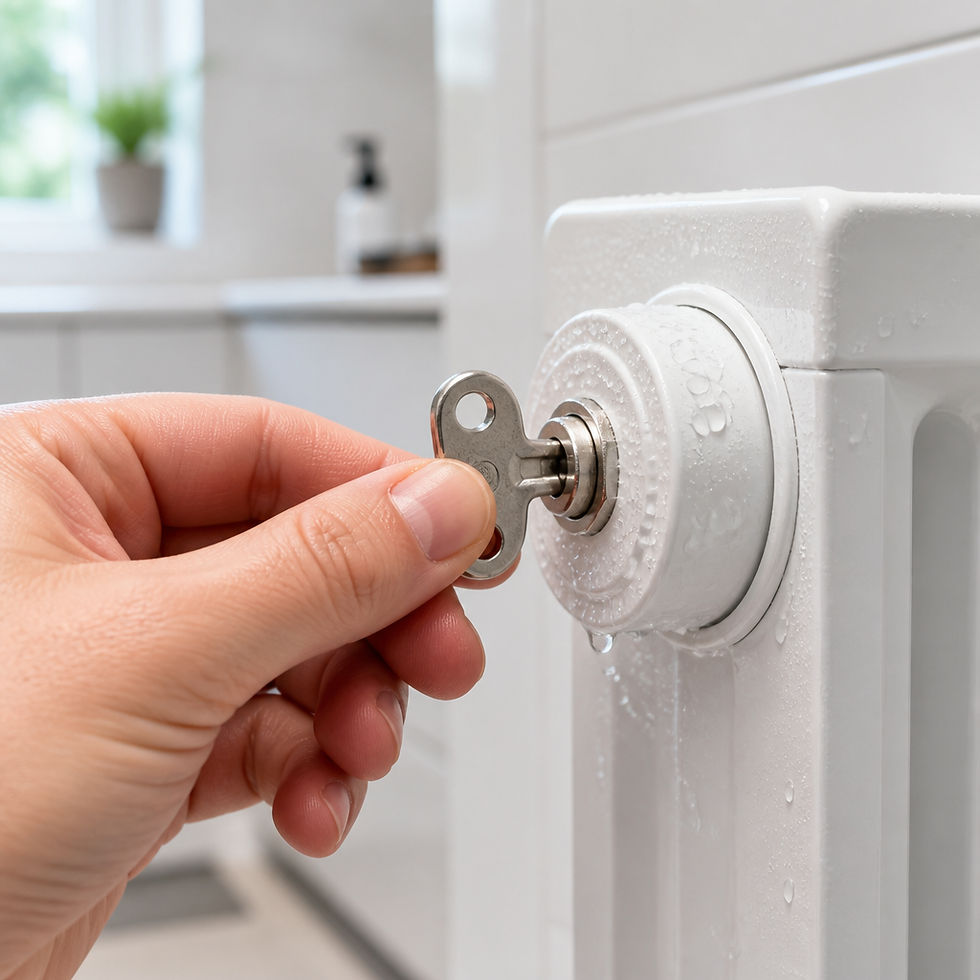

If you bleed the radiators, the air escapes, and within a day or two the same radiator is cold again, you have a leak somewhere in the system that is continuously drawing in air. That is when the job moves beyond DIY and into engineer territory. A Gas Safe registered engineer will pressure-test the system to find where the ingress point is.
Heating Sludge and Magnetite Buildup
Over the years, as water circulates through your steel radiators and pipework, a chemical reaction produces iron oxide particles. These particles combine with other debris to form a thick, dark substance known as magnetite sludge. It is one of the most damaging and most commonly misunderstood problems in UK central heating systems.
Sludge is heavy. It settles at the lowest points of wherever it travels, which means the bottom of your radiators and the lower sections of pipework. When enough sludge accumulates, hot water cannot circulate through those sections. The result is a radiator that is warm or even hot at the top, but cold at the bottom.
A radiator that is blazing hot at the top but stone cold at the bottom is a classic symptom of sludge buildup restricting the flow of hot water through the lower sections of the radiator.
Signs Your System Has a Sludge Problem
When you bleed a radiator and the water that comes out is black or dark brown rather than clear, that is a direct indicator of heavy sludge contamination. Other signs include a boiler that cuts out unexpectedly, a knocking or banging sound from the boiler (known as kettling), inconsistent hot water, and a system that takes a very long time to warm up across the whole house.
A chemical flush introduces cleaning agents into the system and lets them circulate to break down debris. A power flush is more intensive: it uses a high-flow, low-pressure pumping machine to circulate chemicals and force contaminated water out of the system entirely, replacing it with clean water. For systems with significant sludge accumulation, a power flush is the more effective option.
Pro tip: After a power flush, ask your engineer to add a corrosion inhibitor to the system. This chemical slows down the rate at which magnetite forms and will significantly extend the time before sludge becomes a problem again. Skipping this step means the problem returns much faster than it should.
How Often Does Sludge Become a Problem?
There is no fixed schedule, but a reasonable guide is to consider a power flush every five to ten years. More importantly, act when you see the symptoms rather than waiting for a calendar date. Radiators that are cold at the bottom, boiler noise that returns after being fixed, and black bleed water are all signals that the system needs attention now, not next year.
An Unbalanced Heating System
A balanced heating system distributes hot water evenly to every radiator in the property. An unbalanced one sends water to whichever radiators offer the least resistance, usually the ones closest to the boiler or on the ground floor, and leaves the others cold. Balancing involves adjusting the lockshield valves on each radiator so that the flow of water is controlled and spread evenly.
If your upstairs radiators heat up slowly or not at all while downstairs radiators are very hot, an imbalanced system is likely. The fix starts with the upstairs: partially closing the lockshield valves on the radiators that heat up too quickly (usually the downstairs ones closest to the boiler) forces more water toward the radiators that are getting less of it.
Balancing and bleeding are related but different processes. Bleeding removes air. Balancing controls water distribution. You may need to do both. Always bleed first, then balance, because air in the system will give you inaccurate readings when you are trying to set the lockshield valves.
The lockshield valve is the smaller capped valve on the opposite side of the radiator to the thermostatic or manual valve. You adjust it with a lockshield valve adjuster or a pair of grips. On the radiators that heat too quickly, close the lockshield valve to a quarter turn from fully closed. On radiators that heat slowly, open the lockshield further. The goal is to have all radiators reaching their target temperature within roughly the same time window.

Faulty TRV or Lockshield Valve
A Thermostatic Radiator Valve (TRV) controls how much hot water enters a radiator based on the room temperature. Inside the TRV is a pin that opens and closes the valve. When the heating has been off for several months, typically over summer, that pin can seize in the closed position. The TRV looks fine from the outside. The dial moves. But no water is getting through because the pin is stuck.
This is an extremely common cause of a single radiator that is completely cold when all others are working. To check for a stuck pin, remove the TRV head. You will see a small metal pin in the valve body. Press it with your finger or a small screwdriver. If it moves freely and springs back, the valve is working. If it does not move at all, it is seized. Tapping it gently with a small hammer can sometimes free it. If not, the TRV body needs replacing.
A lockshield valve that has been wound fully closed will produce the same result: a completely cold radiator despite the rest of the system working. This is a straightforward fix, but it catches people out because lockshield valves are often tucked behind radiator covers and forgotten about after previous work was done on the system.
Low Boiler Pressure and Pump Problems
For a sealed central heating system (which most modern homes in the North West have), the boiler pressure gauge should sit between 1 and 1.5 bar when the system is cold. Below 1 bar, the system may still fire and produce heat, but the circulation of water through the upper floors will be compromised. The pump is working harder than it should to push water through a system that does not have enough pressure behind it.
Check your boiler's pressure gauge. If the needle is below 1 bar, the system needs repressurising via the filling loop, which is usually a braided hose or a small valve beneath or behind the boiler. This is a task most homeowners can do themselves following the boiler manufacturer's instructions. Once the pressure is back in range, run the heating and check whether the upstairs radiators begin to warm up.
When the Pump Is the Problem
The circulation pump is what moves hot water around your entire system. If the pump is failing or has failed, the hot water stays near the boiler rather than circulating. The symptoms look similar to a sludge blockage: some radiators get warm, others stay cold, and the pattern is often worse upstairs. A pump that has seized after the summer shutdown is a known failure mode.
You can sometimes hear a failing pump. It may produce a humming or grinding noise, or no noise at all when the boiler is running and the heating should be circulating. If bleeding, balancing, and repressurising the system have all failed to fix cold upstairs radiators, the pump is the next thing to check. This is a job for a qualified engineer.
On older open-vented systems (those with a cold water tank in the loft rather than a sealed pressurised system), cold radiators upstairs can also be caused by a blockage in the ball valve or low water levels in the expansion tank. If the water supply to the header tank is restricted, the system does not have enough water to circulate, and the upper floor radiators are the first to suffer.
Comparing the Three Main Fixes
Fix
Best For
DIY or Engineer?
Bleeding Radiators
Cold tops on radiators, gurgling noises, air pockets after system refill
DIY. Takes 10-30 minutes with a bleed key. Check pressure afterwards.
Balancing the System
Uneven heating between floors, some radiators very hot while others stay cold
DIY if you have a thermometer and patience. Engineer recommended for whole-house balancing.
Power Flushing
Persistent cold bottoms on radiators, black bleed water, kettling boiler, slow system warm-up
Engineer only. Requires specialist equipment and chemical handling.
When to Call a Heating Engineer
There is a clear line between what a homeowner can fix and what requires a qualified Gas Safe registered engineer. Bleeding your radiators and topping up boiler pressure are firmly on the DIY side. Everything beyond that belongs with a professional, not because the tasks are necessarily dangerous in themselves, but because getting them wrong makes the underlying problem worse and more expensive to fix.
Call an engineer when: bleeding does not solve cold radiators and they go cold again within days; the bleed water is black or dark brown; your boiler is making kettling or banging noises; a radiator remains completely cold after you have confirmed the TRV pin is free and the lockshield is open; or the system pressure drops repeatedly without an obvious reason.
For homeowners in Leigh, Wigan, and surrounding areas including Warrington, Bolton, and Manchester, Neptune Plumbing and Heating offers central heating services and boiler repair, including 24-hour emergency callouts. If your central heating problem Leigh or wider North West is creating an urgent situation, particularly heading into winter, getting an engineer out quickly prevents the problem from compounding into a full system failure.
A heating engineer will diagnose the actual root cause rather than treating symptoms. If sludge is the problem, bleeding alone will not fix it. If the pump is failing, no amount of balancing will compensate. The right diagnosis at the start saves time and money compared to working through fixes one by one while the house stays cold.
Pro tip: When you call for an engineer, note down the specific pattern before they arrive. Which radiators are cold? Are they cold all over or just at the top or bottom? How long has it been like this? Has anything changed recently such as a system refill, new radiator, or recent boiler service? This information cuts diagnostic time significantly and means you are not paying for the engineer to gather information you already had.
Frequently Asked Questions
Why are my upstairs radiators cold but the downstairs ones are hot?
This is almost always a system balancing issue. Hot water takes the path of least resistance, and your ground floor radiators are closer to the boiler and pump. The fix is to partially close the lockshield valves on the hottest downstairs radiators, which diverts more water pressure to the upper floor. If balancing does not help, low pump pressure or a failing pump may be preventing water from reaching the upper floor consistently.
Can I bleed upstairs radiators myself?
Yes. Bleeding a radiator requires only a bleed key (available from any DIY store for a small cost) and a cloth. Open the bleed valve at the top of the radiator, let the air hiss out, and close it once water flows consistently. The one essential follow-up step is checking your boiler pressure gauge afterwards. If it has dropped below 1 bar, repressurise the system via the filling loop before running the heating again.
What does it mean if my radiator is hot at the top but cold at the bottom?
This pattern points directly to magnetite sludge settled at the bottom of the radiator. The hot water enters from the top connection but cannot circulate through the lower section because the sludge is blocking it. Bleeding will not fix this. The system needs either a chemical flush or a full power flush, depending on how widespread the contamination is. When you bleed that radiator, watch the colour of the water. Black or dark brown water confirms sludge is present throughout the system.
How much does a power flush cost in the North West?
Power flush costs vary depending on the size of the system and how many radiators are involved. Smaller systems with fewer radiators cost less than larger houses with many radiators. It is always worth getting a fixed-price quote from a local engineer before committing. The cost of a power flush is substantially less than replacing a heat exchanger that has been damaged by prolonged sludge contamination, which is the real risk of leaving the problem untreated.
My radiator not heating North West issue came back after bleeding. What should I do?
If a radiator goes cold again within a day or two of bleeding, there is an ongoing source of air entering the system. This usually means there is a small leak somewhere in the pipework or connections that is drawing in air as the system cools. A Gas Safe registered engineer needs to pressure-test the system to locate the source of the air ingress and seal it. Running the system with a persistent leak also accelerates sludge formation.
Is it safe to keep running my boiler if some radiators are cold?
In most cases, yes, but it depends on the cause. If the cold radiators are due to air or an imbalanced system, running the boiler is fine while you arrange a fix. If the cold is caused by heavy sludge, the boiler is under additional strain and may overheat or cut out repeatedly. If your boiler is making kettling or banging noises alongside cold radiators, reduce use until an engineer can assess it. A boiler that is repeatedly overheating to compensate for poor circulation is one that is heading toward an expensive failure.
How do I know if my TRV pin is stuck?
Remove the TRV head by unscrewing it from the valve body. Look at the centre of the valve body and you will see a small metal pin. Press it with your finger. It should move down easily and spring back up when you release it. If it does not move at all or moves with significant resistance, the pin has seized. Try pressing it several times or tapping it gently with a small screwdriver. If it frees up, refit the TRV head and check whether the radiator starts heating. If the pin remains stuck, the TRV body needs replacing.
Have you recently fixed a cold radiator issue in your home? Share what worked for you in the comments, or let us know if there is a specific symptom you would like us to cover.


Comments