


Combi Boiler Flow Rate: Wigan Homeowner's Guide
Most Wigan homeowners shopping for a new boiler fixate on brand names and price tags. They scroll through specs, pick the model with the biggest kW number, and assume the job is done. Then the engineer arrives, installs the boiler, and the shower is still disappointing. The culprit, almost every time, is combi boiler flow rate, a number that sits quietly in the technical data sheet and quietly determines whether your hot water is powerful or pathetic. This guide cuts through the confusion so that when you are ready for boiler installation in Wigan, you know exactly what to ask for and why.
Table of Contents
What Is Combi Boiler Flow Rate?
A combi boiler's flow rate is the volume of hot water it can deliver per minute, measured in litres per minute (L/min or LPM). A boiler rated at 12 L/min can, under the right conditions, push 12 litres of hot water through your taps every single minute. A boiler rated at 16 L/min can do considerably more, which is the difference between a confident shower and a dribble that makes you wonder if something is broken.
Unlike a system boiler or a conventional boiler, a combi heats water directly from the mains the moment you open a hot tap. There is no stored hot water cylinder buffering the demand. That means the flow rate figure on the spec sheet is the ceiling of what your hot water experience can ever be, and your actual mains supply is the floor.
Pro tip: Flow rate and boiler pressure are related but not the same thing. Pressure is measured in bar and describes the force behind the water. Flow rate describes the volume delivered. You can have decent pressure but still suffer poor flow if your incoming mains pipe is narrow or partially blocked.
Quick Takeaways
Key Insight
Explanation
Flow rate is measured in L/min
Combi boiler hot water output is expressed as litres per minute. Typical range across the UK market runs from around 9.8 L/min up to 25 L/min.
Your mains supply sets the real ceiling
A boiler rated at 15 L/min cannot exceed the incoming mains flow. If mains supply is only 10 L/min, that is all you will ever get.
10 L/min is the functional minimum
Combi boilers generally need at least 10 L/min from the mains to operate reliably. Below this, performance suffers noticeably.
Multiple bathrooms need higher flow rates
If two showers run simultaneously, the available flow rate is effectively halved. A two-bathroom home needs to plan for this from the start.
kW output and flow rate are linked but separate
A higher kW boiler can heat water faster, but only if the incoming mains pressure is sufficient to supply that volume.
A simple bucket test reveals your mains flow
Fill a measured container from a cold mains tap and time it. This gives you a real-world baseline before choosing a boiler.
Low mains pressure is fixable before installation
Booster pumps and accumulator tanks can compensate for poor mains flow, but these are decisions to make before the boiler goes in, not after.
Understanding these seven points alone will put you ahead of most people who walk into a boiler purchase. The rest of this guide explains each one in the practical detail you need to make the right call for your specific home in Wigan or across the wider North West.

Why Flow Rate Matters More Than kW Output
When homeowners in Leigh and Wigan compare combi boilers, the kW output is the number that gets all the attention. It sounds straightforward: bigger number, more powerful boiler. But kW output describes how quickly the boiler can heat water, not how much water it can actually move through your pipes.
Flow rate is the spec that determines your day-to-day hot water experience. It tells you whether two people can shower in the same morning without the second person getting a lukewarm trickle. It tells you whether your kitchen tap runs properly while the bathroom basin is in use. kW matters, but flow rate is what you feel.
The kW and L/min Relationship
These two figures are connected. A higher kW boiler can heat a larger volume of water in a given time, which is why higher output boilers tend to carry higher flow rates. A 24kW combi boiler can typically deliver around 10 litres of hot water per minute at a temperature rise of 35°C. A 40kW combi can push that figure up to roughly 16 litres per minute under the same conditions. The important word is "can." The kW figure sets the potential. The mains supply determines whether that potential is ever reached.
A boiler fitted with a flow rate higher than what the home can supply will never work at its stated capability, leaving the property heated and served with hot water inefficiently regardless of the boiler's headline specification.
This is precisely why a thorough site assessment before any boiler installation in Wigan should include measuring the incoming mains flow, not just counting the radiators.
Pro tip: Ask any engineer quoting for your boiler installation whether they plan to measure your mains flow rate before recommending a model. If the answer is no, that is a warning sign worth taking seriously.
How Your Mains Supply Caps Your Flow Rate
Because a combi boiler draws water directly from the mains, the incoming supply pressure and volume act as a hard limit on performance. It does not matter how capable the boiler itself is. If the water arriving at your property cannot feed the boiler adequately, the boiler's rated flow rate becomes irrelevant.
The mains water flow rate to most UK homes sits somewhere between 10 and 15 litres per minute. Homes with a good mains supply above 15 L/min have the widest range of boiler options available to them. Homes at or below 10 L/min need to either manage expectations or address the supply problem before choosing a combi.
How to Test Your Own Mains Flow Rate
You do not need specialist equipment for a basic check. Take a container of known volume, place it under a cold mains tap (such as your kitchen tap, which is usually fed directly from the mains), turn it on fully, and time how long it takes to fill. Divide the container volume in litres by the number of seconds, then multiply by 60. That gives you your approximate mains flow in L/min. This is a rough guide, but it is far better than nothing when planning a purchase.
For a more accurate picture, a properly calibrated pressure gauge connected to an outside tap while water is running gives you the dynamic pressure reading, which is the pressure that actually matters during use. Optimal boiler performance generally needs dynamic pressure in the region of 1.5 to 2.0 bar. Below 1.0 bar, most combi boilers struggle to operate reliably.
Old Pipework and Flow Restrictions in North West Homes
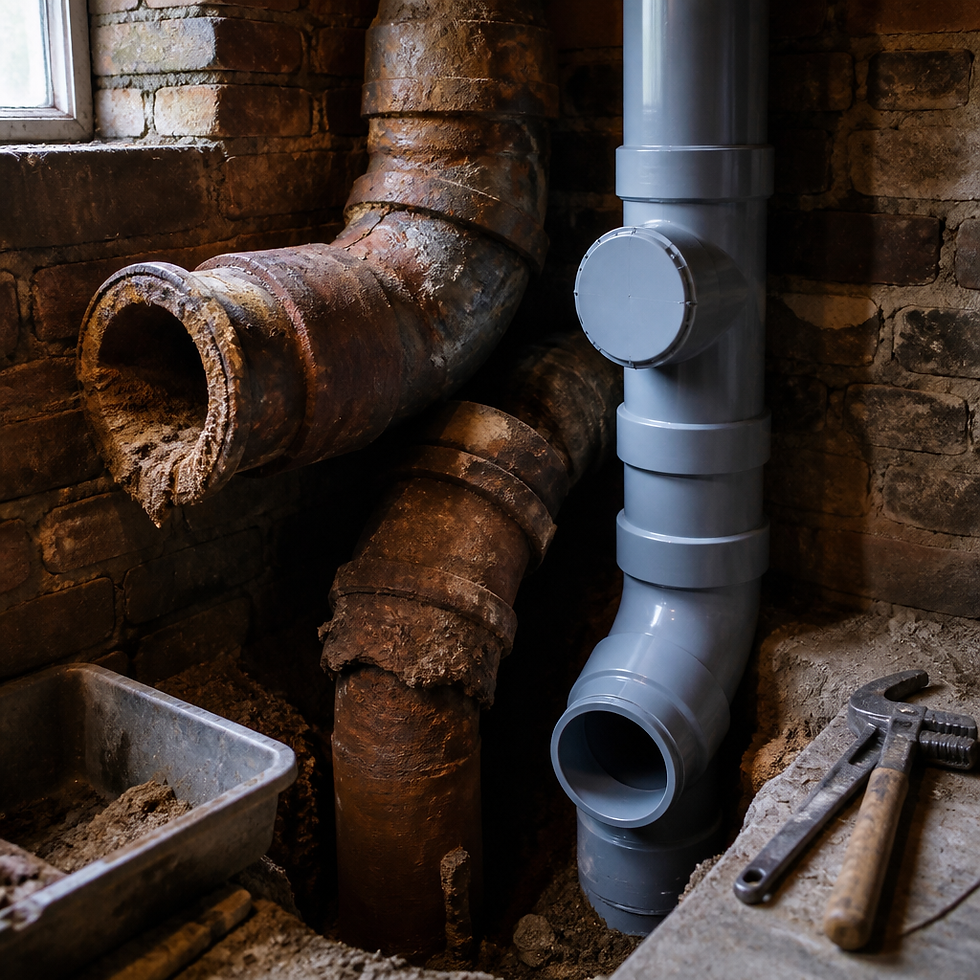
Wigan and the wider North West has a significant stock of older housing. Terrace houses and semi-detached properties built in the mid-twentieth century often have the original, narrow lead or iron supply pipes still connecting the property to the water main. These pipes create frictional resistance and restrict flow well below what the mains could otherwise deliver. Replacing the supply pipe is a worthwhile investment before a new boiler goes in, and it is a conversation worth having with your engineer when discussing your new boiler installation.
Matching Flow Rate to Your Home Size
The right flow rate depends on how many people live in your home, how many bathrooms you have, and how likely it is that hot water will be demanded from more than one point simultaneously. These are the practical questions, not abstract specifications.
One Bathroom Homes
A one-bathroom property with up to around ten radiators and a single household of two people functions well with a flow rate of around 10 to 11 L/min. A 24kW to 27kW combi boiler typically covers this comfortably. There is rarely a simultaneous demand problem in a single-bathroom home, so the lower end of the flow rate range is entirely adequate.
Two Bathroom Homes
Two bathrooms changes the calculation significantly. If two showers run at the same time, the available flow rate is split between them. A boiler delivering 12 L/min suddenly provides only around 6 L/min per shower, which is noticeable and usually unsatisfying. For two-bathroom properties, a boiler in the 28kW to 34kW range is generally more appropriate, with a flow rate of 12 to 15 L/min or above.
Three or More Bathrooms
At three bathrooms, the honest conversation is whether a combi boiler is still the right choice at all. High flow rate combis can handle this demand, but only where the mains supply is genuinely strong. Many engineers, including those covering Wigan, Warrington, Bolton, and Manchester, will recommend a system boiler with a properly sized hot water cylinder for three-bathroom properties, because stored hot water removes the dependence on mains flow entirely. It is worth getting that conversation on the table early rather than discovering the limitation after installation.

Combi Boiler Size and Flow Rate Comparison
The table below maps typical boiler output ranges to property types and expected flow rate performance. These are representative figures based on industry guidance, not guarantees for any specific model. Always confirm figures from the manufacturer's data sheet for the boiler you are considering.
Property Type
Recommended Boiler Output
Typical Flow Rate Range
1-2 bed, 1 bathroom, up to 10 radiators
24kW to 27kW combi
9 to 11 L/min
3 bed, 1-2 bathrooms, up to 15 radiators
28kW to 34kW combi
12 to 15 L/min
4+ bed, 2-3 bathrooms, high demand
35kW+ combi or system boiler
15 to 25 L/min (combi) or cylinder-fed (system)
What this table makes clear is that there is no single "best combi boiler for the North West." The right boiler is the one matched to your specific home's demand and your incoming mains capacity. A larger boiler does not automatically mean better performance, and in some cases it means paying more for a capability your mains supply can never actually deliver.
What to Do If Your Mains Pressure Is Low
Low mains pressure is a solvable problem. It should not be a reason to abandon a combi boiler entirely, but it does need to be addressed before installation rather than hoped away. There are two main approaches, and a good heating engineer will assess which is appropriate for your property.
Mains Booster Pumps
A mains booster pump detects when pressure and flow drop below a usable threshold and automatically boosts the incoming supply. This is typically the simpler and less expensive option, with installation costs in the range of a few hundred pounds depending on specification. It is particularly useful in properties where the mains supply is borderline rather than genuinely poor.
Accumulator Tanks
An accumulator tank is a sealed steel vessel that stores mains water under pressure using an internal air bladder. When a tap is opened, the stored water releases rapidly, delivering a burst of flow that the mains alone could not sustain. This approach is better suited to homes with consistently low mains pressure rather than occasional fluctuations. Installation costs are higher than a booster pump alone, typically in the region of five hundred to one thousand pounds or more depending on tank size, but for the right property it is a genuinely effective solution.
Both options can be combined with a combi boiler and are far less disruptive to install than switching to a system boiler and cylinder. The key is assessing which is appropriate before the boiler purchase is made, not after you have already committed to a specific model.
Pro tip: If you share a water main with neighbouring properties, your flow rate may drop at peak times such as mornings when multiple households draw simultaneously. A booster pump that responds dynamically to real-time pressure is more effective in this scenario than simply upsizing the boiler.
Common Mistakes Wigan Homeowners Make When Buying a Combi
After handling boiler installations across Wigan, Leigh, and the surrounding North West areas, certain patterns in buying decisions come up repeatedly. These are the errors worth knowing about before you commit.
Choosing a Boiler Without Checking the Mains Flow First
This is the most common and most expensive mistake. Homeowners choose a boiler based on a recommendation or a price comparison, the installation goes ahead, and the hot water performance is disappointing. In many cases, the boiler is perfectly capable of its rated flow, but the mains supply simply cannot feed it. A ten-minute flow test before the purchase decision would have changed everything.
Oversizing to "Future-Proof"
Buying a 40kW combi for a two-bedroom terrace is not future-proofing. It is spending money on headroom that the mains supply will never allow you to use, and potentially creating inefficiency because the boiler is running well below its design parameters. Size the boiler to match your home and your mains supply, not to a hypothetical maximum demand.
Ignoring the Pipework Age
Fitting a brand new, high-specification combi boiler onto old, narrow supply pipework is like fitting performance tyres on a car with a seized brake. The boiler cannot express its capability when the infrastructure feeding it is the limiting factor. Assessing and, where necessary, replacing the supply pipe is part of a proper installation, not an optional add-on.
Assuming All North West Properties Have Similar Mains Pressure
Wigan is served by United Utilities for its water supply. Mains pressure and flow vary significantly across the borough, from newer estates with modern infrastructure to older terraced streets with legacy pipework. Properties in Leigh may have different characteristics from those in parts of Bolton or Warrington. Never assume your neighbour's experience will match yours.
For emergency plumbing situations or urgent boiler replacements, it can be tempting to take a quick decision on the replacement model. In those moments, even a brief flow check by the attending engineer before finalising the boiler choice will save significant frustration later. A reputable engineer always makes time for this step.
Frequently Asked Questions
What is a good flow rate for a combi boiler in a typical Wigan home?
For a standard three-bedroom home in Wigan with one bathroom, a flow rate of 10 to 12 L/min is generally adequate. If you have two bathrooms or more than one person regularly using hot water at the same time, aim for 12 to 15 L/min or higher. The actual flow rate you can achieve depends on your incoming mains supply as much as the boiler's specification.
How do I find out what my mains flow rate is before buying a boiler?
A simple bucket test gives a useful rough figure. Fill a container of known volume from your kitchen cold tap on full, time it, and calculate litres per minute. For a precise reading, ask your heating engineer to carry out a dynamic pressure test using a calibrated gauge connected to an outside tap while water is flowing elsewhere in the property. This is the figure that matters most for boiler selection.
Can I improve my flow rate after a combi boiler has already been installed?
Yes. A mains booster pump can be fitted to increase incoming pressure and flow, and an accumulator tank can be added to buffer stored water for peak demand moments. Both can be retrofitted, although it is more straightforward and cost-effective to assess and address the need before the boiler installation rather than after. If you are already experiencing poor hot water performance from an existing combi, a heating engineer can assess whether a pump or tank would help.
Does a higher kW boiler always mean a higher flow rate?
Generally, yes, because a higher kW output means the boiler can heat more water in a given time. However, this only translates into a higher real-world flow rate if the incoming mains supply can feed that capacity. A 40kW boiler on a mains supply delivering only 8 L/min will not outperform a 28kW boiler on the same supply. The mains flow rate is the hard ceiling regardless of boiler output.
Is a combi boiler suitable for a home with three bathrooms in the North West?
It depends heavily on the mains supply and the likelihood of simultaneous use. Where two or more bathrooms are likely to be used at the same time, the available flow rate is split across outlets, and the per-outlet performance drops. Many heating engineers recommend a system boiler with a hot water cylinder for three-bathroom properties, because stored hot water removes the dependence on mains flow entirely. If mains supply is genuinely strong and simultaneous use is rare, a high flow rate combi can work, but this should be an assessed decision, not an assumption.
What is the minimum mains pressure needed for a combi boiler to work properly?
Most combi boilers require a dynamic mains pressure of at least 1.0 bar to operate at all, with optimal performance generally requiring 1.5 to 2.0 bar. Above 3.0 bar, a pressure-reducing valve is typically fitted to protect the system. If your dynamic pressure falls below 1.0 bar, a booster pump or accumulator tank is worth discussing with your engineer before installation proceeds.
Have you had experience with disappointing hot water performance after a boiler installation, or do you have questions about what flow rate is right for your specific property? Share your situation in the comments and we will point you in the right direction.
References
Why boiler flow rates matter and how mains supply limits combi performance
Combi boiler flow rates explained by LPM category, including booster and accumulator options
How combi boiler flow rates are measured and what affects real-world hot water delivery
High flow rate combi boilers and guidance on matching boiler output to mains supply
Boiler size guide covering kW output and LPM flow rate requirements by property type


Comments