


Leaking Pipe Manchester: A Plumber's Repair Guide
- Michael Beresford
- Aug 3
- 11 min read
A single dripping tap wastes up to 5,500 litres of water per year, according to United Utilities. A leaking pipe Manchester homeowners ignore for even a few weeks can rot joists, blister plasterwork, and turn a £90 fix into a £900 insurance claim. Whether you are in Wigan, Bolton, Warrington, or closer to Manchester city centre, the leaks showing up in North West homes follow predictable patterns, and most of them give clear warning signs before they become emergencies. This guide walks you through every common household water leak, tells you which ones you can manage yourself, and tells you exactly when to call in a professional plumber.
Table of Contents
Quick Takeaways
Key Insight
Explanation
Dripping taps waste thousands of litres annually
Even a slow drip loses roughly 15 litres per day. Replacing a worn washer or cartridge costs far less than the added water bill.
North West water is hard and corrodes fittings faster
Lime-scale build-up weakens compression joints and valve seats, making leaks more frequent in Greater Manchester and Wigan homes than in softer-water regions.
A leaking pipe inside a wall needs a plumber, not a YouTube fix
Concealed pipework leaks require pressure-testing and thermal imaging to locate accurately. Amateur probing causes far more damage than the original fault.
Central heating leaks require a Gas Safe registered engineer if the boiler circuit is involved
Opening sealed heating circuits without the correct qualifications can void your boiler warranty and create carbon monoxide risks.
Turn off the stopcock first, every time
The mains stopcock is usually under the kitchen sink. Knowing where it is before a leak happens saves serious water damage on the day.
Emergency callouts are not always avoidable, but most leaks give 48-hour warning signs
Damp patches, musty smells, and sudden pressure drops are signals. Acting on them during business hours costs significantly less than a Sunday night emergency callout.
Neptune Plumbing and Heating offer 24-hour emergency callouts across the North West
For genuine emergencies in Wigan, Manchester, Bolton, and Warrington, a local family-run team with full guarantees is available around the clock.
Why Leaks Are Worse in North West Homes
Greater Manchester and Wigan sit in a region where the water supply transitions between medium and moderately hard water, depending on the exact postcode and the source reservoir. Over years, limescale accumulates inside copper and plastic push-fit fittings, gradually weakening the seal. In practice, this means a compression joint that was perfectly watertight when it was installed ten years ago can start weeping without any obvious trauma or physical damage.
Cold winters compound the problem. Pipes running in uninsulated roof spaces, behind external walls, or through garages are exposed to freeze-thaw cycles every year. When water freezes, it expands by roughly 9 percent in volume. That expansion puts enormous stress on soldered joints and plastic couplings. The burst or the pinhole leak often does not appear until the thaw, by which point the damage is already done.
Older housing stock in areas like Leigh, Hindley, and parts of Salford still contains original lead pipework or early-era polybutylene (PB) plastic pipes, both of which are now known to degrade. Polybutylene pipes installed before 1995 are a particular red flag, since the material becomes brittle and micro-cracks along its length as it ages. If your home was built between 1975 and 1995 and you have never had the pipework inspected, that inspection is overdue.

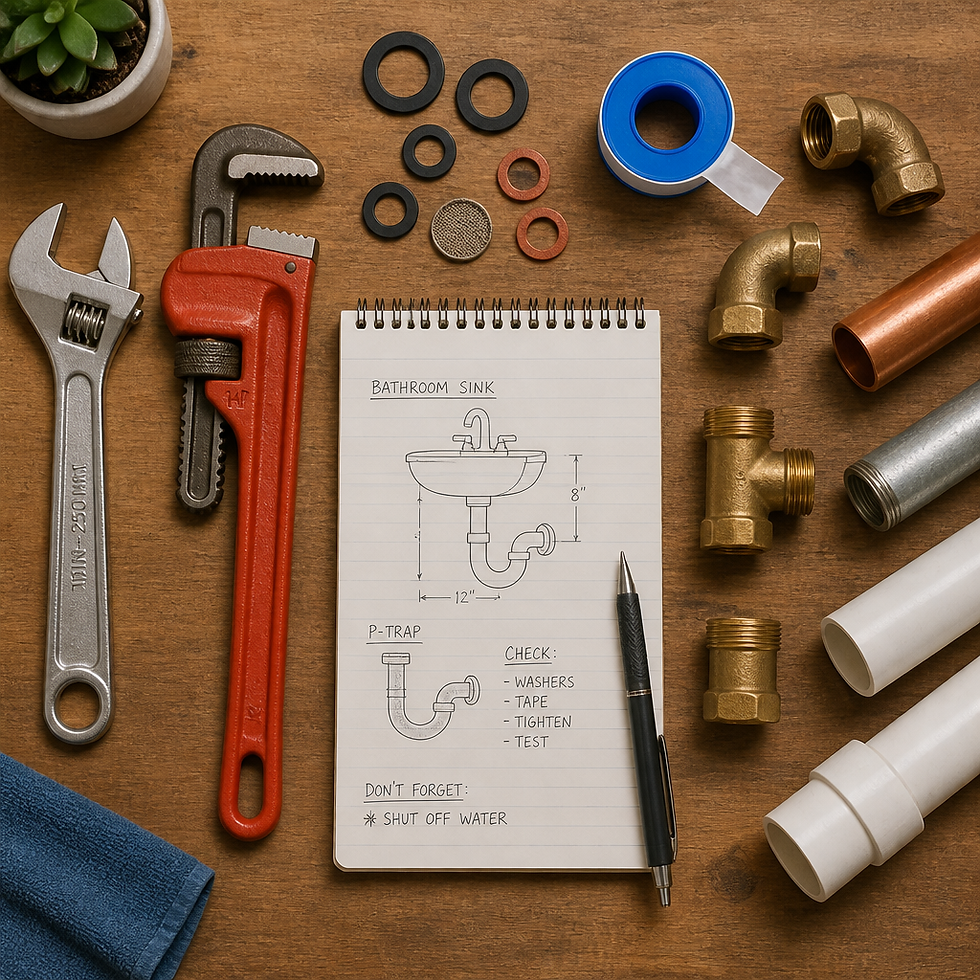
Dripping Tap Repair: Wigan and Beyond
A dripping tap is the most common call a plumber receives, and it is also the most misdiagnosed. Homeowners assume the job takes five minutes and a new washer from the hardware shop. Sometimes it does. More often, the fault lies in a worn cartridge, a corroded valve seat, or a ceramic disc that has cracked under lime-scale pressure.
Traditional Pillar Taps with Rubber Washers
These are the older style taps still found in pre-2000 homes across Wigan, Bolton, and Warrington. The repair involves isolating the water supply, removing the tap head, unscrewing the headgear nut, and replacing the rubber washer seated at the bottom of the spindle. The whole job takes about 20 minutes if the tap has not been cross-threaded or corroded shut.
A common mistake is replacing only the washer and ignoring the valve seat. If the brass seat is pitted or scored from years of the tap being overtightened, a new washer will not form a proper seal and the drip returns within weeks. Valve seat re-facing tools are inexpensive and the correct fix when the seat is visibly damaged.
Modern Ceramic Cartridge Taps
Mixer taps with ceramic disc cartridges are now standard in most bathrooms and kitchens installed after 2005. When these drip, the entire cartridge needs replacing rather than just a component inside it. Cartridges are brand-specific, which means identifying the tap manufacturer correctly matters. Fitting a generic cartridge to a name-brand tap is a false economy and usually leaks again within months.
For dripping tap repair in Wigan, Neptune Plumbing and Heating carry a wide stock of replacement cartridges for the most common brands found across Greater Manchester homes. Booking a repair visit during standard hours is straightforward via their website at neptuneplumbingheating.co.uk.
Pro tip: Before calling a plumber for a dripping tap, photograph the tap brand name or model number, usually stamped on the top of the tap body or printed inside the handle cover. This single step cuts diagnosis time and often means the engineer arrives with the correct part already on the van.
Leaking Pipe Manchester: Identifying the Source
When Manchester homeowners report a leak, the first challenge is almost always location. Water travels. A leaking pipe in a first-floor bathroom can travel along a joist and reappear as a damp patch on a ground-floor ceiling several metres away from the actual fault. Chasing water damage is one of the most time-consuming diagnostic tasks a plumber carries out.
Visible Pipe Runs in Kitchen and Bathroom
Pipes under sinks, behind toilets, and at radiator valve connections are the easiest to check. Look for white limescale deposits forming a crust around a joint, greenish verdigris on copper, or a steady drip forming a puddle on the cabinet floor. These leaks are almost always fixable on a standard visit with no special equipment.
A pinhole leak in copper pipe is a more serious finding. Pinholes form from internal corrosion, often accelerated by flux residue left on the inside of the pipe after soldering, or by stray electrical current in older homes. One pinhole usually means more are forming nearby, so replacing the affected section rather than patching the single hole is the correct approach.
Concealed Pipework Behind Walls and Under Floors
This is where the cost escalates quickly if handled incorrectly. The correct process is to use a thermal imaging camera or acoustic leak detection equipment to pinpoint the fault before any opening up of walls or floors begins. In practice, a skilled plumber can often identify the exact location within 15 centimetres, meaning only one small access panel needs to be cut rather than an entire section of wall being opened.
Requesting thermal imaging before any destructive investigation should be a non-negotiable request from any homeowner dealing with a suspected concealed leaking pipe in Manchester properties, particularly in Victorian and Edwardian terraced houses where pipe runs can be unpredictable.

Under-Sink and Waste Pipe Leaks
Waste pipe leaks are the category most homeowners attempt to fix themselves, with mixed results. The plastic push-fit waste systems used in modern kitchens and bathrooms are forgiving, but they have specific failure modes that are worth understanding.
Push-Fit Waste Connections
The rubber O-ring seal inside each push-fit connection degrades over time, particularly if cleaning chemicals are poured down the drain regularly. Bleach and caustic drain cleaners attack the rubber and cause it to swell and then crack. A common mistake is assuming that hand-tightening a push-fit connection harder will stop the drip. It will not. Once the O-ring is compromised, only replacing it or the entire fitting will solve the problem permanently.
Bottle Trap and P-Trap Leaks
The trap under a basin or kitchen sink holds a water seal that prevents sewer gases from entering the property. When a trap leaks, it is usually at the compression nut at the top of the trap where it connects to the waste outlet. Hand-tightening this nut is often all that is needed, but overtightening it will crack the plastic and make the problem worse. Finger-tight plus a quarter turn with pliers is the correct technique.
Central Heating Pipe Leaks: A Different Beast
Central heating leaks are categorically different from cold water leaks and should be treated with more caution. The water inside a sealed heating system is treated with inhibitor chemicals, operates at elevated pressure, and cycles through extreme temperature changes every time the boiler fires.
A small leak on a heating circuit causes the system pressure to drop, which triggers the boiler to lock out on a low-pressure fault. Many homeowners repeatedly top up the system pressure using the filling loop without finding the root cause, which is both wasteful and corrosive to the system's internal components. Adding fresh oxygenated water repeatedly accelerates internal corrosion in radiators and the heat exchanger.
"Every time you top up your heating system because of a pressure drop, you are introducing fresh oxygen into a sealed circuit. Oxygen is the primary cause of sludge and corrosion in central heating. Find the leak and fix it rather than masking the symptom." - Neptune Plumbing and Heating, Leigh, Wigan
Radiator valve leaks, particularly at the packing nut of a manual or thermostatic radiator valve (TRV), are very common and straightforward for a plumber to rectify. Pipework leaks within the flow and return circuits, particularly at push-fit or solder joints near the boiler, require draining down the system and proper pipe repair. This is not a DIY job for a sealed system boiler installation.
For any central heating pipework leak connected to a boiler installed by Neptune Plumbing and Heating, their boiler installation guarantee covers the labour on associated pipework faults within the guarantee period. Always check your installation documentation before arranging a separate paid callout.
Pro tip: Write the date on a piece of tape and stick it next to the pressure gauge on your boiler. If the pressure drops from 1.5 bar to below 1 bar within 48 hours after you top it up, you have an active leak somewhere in the system. That rate of loss needs a plumber, not another top-up.
DIY vs Emergency Plumber Manchester: Where to Draw the Line
The honest answer is that most homeowners can safely handle two things: replacing a tap washer on a traditional tap and re-seating a push-fit waste connection. Everything beyond that carries meaningful risk of making the situation significantly worse or, in the case of heating systems, voiding warranties or creating safety hazards.
Situations That Require an Emergency Plumber Immediately
Burst pipes causing active flooding. Any leak that is wetting electrical fittings, sockets, or consumer units. A leaking pipe inside a wall or ceiling where the source is unknown. Any leak from the boiler casing itself or from pressurised hot water cylinder connections. These situations require a qualified emergency plumber in Manchester, not a temporary patch.
What to Do While Waiting for the Engineer
Turn off the mains stopcock to stop the water supply. Turn off the electricity at the consumer unit if water is near any electrical fittings. Open taps to drain residual water from the pipes and reduce pressure on the leak. Take photographs of the damage for your insurance claim. Do not use towels to soak up water that is still actively flowing, as it creates a false impression the leak has stopped when it has not.
Neptune Plumbing and Heating provide 24-hour emergency callouts across Greater Manchester, Wigan, Warrington, and Bolton. Their emergency response is designed for exactly these situations, with experienced engineers dispatched quickly and fully equipped to handle the most common emergency scenarios on the first visit.
Comparing Repair Approaches for Common Household Leaks
Repair Approach
Best Used For
Key Limitation
DIY washer or O-ring replacement
Traditional pillar taps, push-fit waste connections, visible accessible joints with minor drips
Only effective when the valve seat and fitting body are undamaged. Incorrect technique causes cross-threading or cracked fittings, increasing repair cost.
Professional pipe repair on visible runs
Pinhole leaks in copper pipe, compression joint failures, leaking radiator valves, waste trap replacements
Requires draining down of relevant circuits and professional soldering or press-fit tooling. Not suitable for DIY without proper training.
Thermal imaging plus professional concealed pipe repair
Leaks behind walls, under floors, or in ceiling voids where the source is not visible
Higher upfront diagnostic cost, but prevents unnecessary destructive investigation. The correct choice for concealed leaking pipe Manchester situations to avoid major structural damage.
Frequently Asked Questions
How much does dripping tap repair cost in Wigan?
A standard dripping tap repair in Wigan typically costs between £60 and £120 for labour on a standard visit, depending on the tap type and whether parts are needed. Ceramic cartridge replacements add £15 to £40 for the part. Booking during standard weekday hours rather than as an emergency significantly reduces the total cost.
How do I know if I have a leaking pipe inside my wall?
The signs include a persistent damp or musty smell from a wall that has not been wet externally, paint or wallpaper bubbling away from the wall surface, unexplained drops in water pressure, or a water meter that continues to tick over when all taps and appliances are turned off. If you notice any two of these together, treat it as a confirmed concealed leak until a plumber can investigate with proper equipment.
Can I fix a burst pipe myself before the emergency plumber arrives in Manchester?
You can slow the flow by turning off the mains stopcock, but you should not attempt to repair a burst pipe yourself. Temporary fixes using pipe repair tape or push-fit stoppers can fail suddenly and make the flooding worse. The correct action is to isolate the water supply, drain the pipework by opening taps, and wait for a qualified emergency plumber in Manchester to carry out a proper repair.
Why does my central heating keep losing pressure after I top it up?
Repeated pressure drops in a sealed heating system mean there is an active leak somewhere in the circuit. Common locations are radiator valve packings, micro-bore pipework joints behind radiators, and the pressure relief valve discharge pipe if the boiler is overpressurising. A plumber needs to inspect the entire circuit to find the source. Continuing to top up without investigation causes progressive corrosion damage to your boiler heat exchanger.
Is it safe to use my boiler if there is a small leak on a nearby heating pipe?
No. A leak near the boiler can drip onto the burner assembly, control electronics, or flue components. Even a minor leak that appears cosmetically insignificant can cause electrical short circuits inside the boiler casing or introduce moisture into the flue, creating carbon monoxide risks. Turn the boiler off and contact a qualified heating engineer before using it again.
How quickly can Neptune Plumbing and Heating respond to an emergency leak in Manchester?
Neptune Plumbing and Heating offer 24-hour emergency callouts across the North West, including Manchester, Wigan, Bolton, and Warrington. Response times depend on current demand and your exact location, but their 24-hour service is specifically designed to get an engineer to you as quickly as possible, day or night, including weekends and bank holidays.
Have you dealt with a leaking pipe or persistent dripping tap in your North West home? Share what worked for you in the comments, or let us know if there is a specific type of leak you would like covered in more detail.
References
UK Environment Agency guidance on household water use and leak reduction targets
Statista data on UK household water consumption and plumbing fault statistics
Which? consumer guidance on hiring a plumber and understanding fair repair costs in the UK
Association of British Insurers guidance on escape of water claims and home insurance implications


Comments