


Wall Panel Bathroom Installation: Smart Choice for UK Homes
- Michael Beresford
- Jun 27
- 11 min read
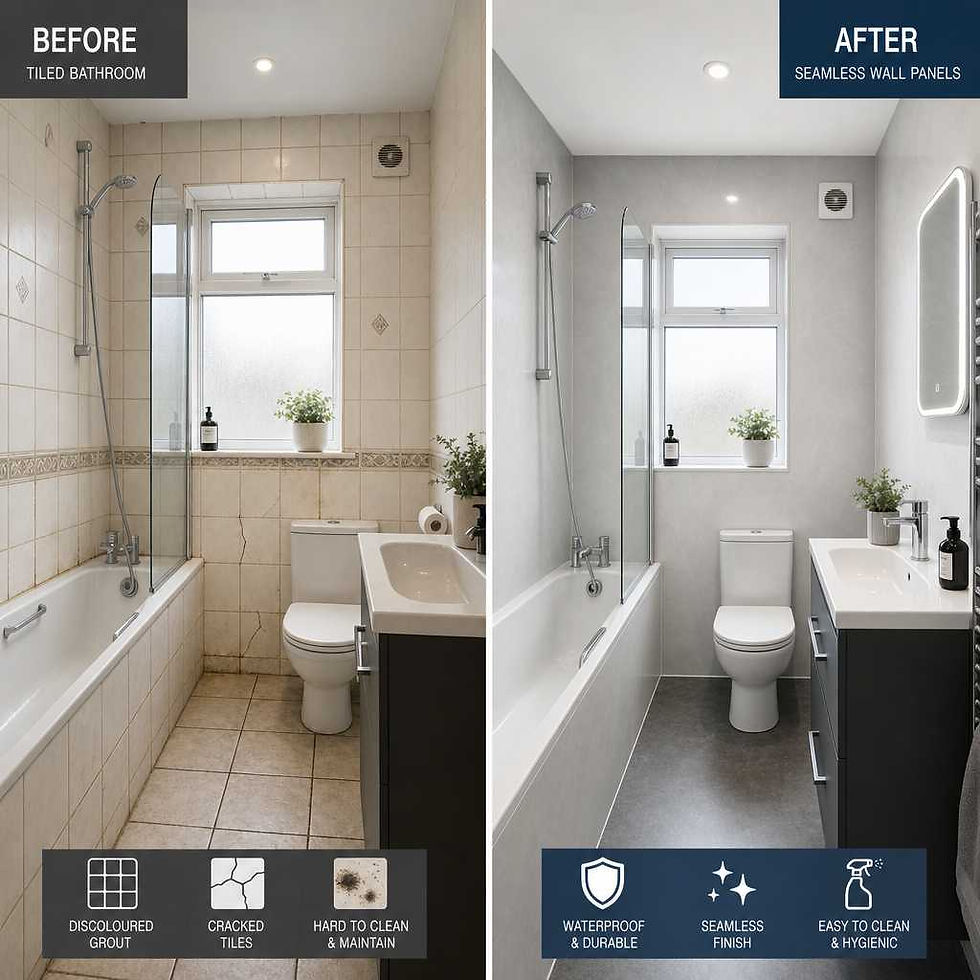
Tiles crack, grout discolours, and bathroom renovations drag on for weeks. If you have experienced any of those frustrations, wall panel bathroom installation deserves serious consideration. Across the North West, homeowners are switching from traditional tiled bathrooms to wall panels at a growing rate, and the reasons go well beyond aesthetics. Panels are faster to fit, easier to clean, and in many cases more durable than grout-lined tiles. For anyone weighing up a bathroom renovation in Wigan, Warrington, Bolton, or Manchester, this guide cuts through the noise and tells you exactly what wall panels offer and what to expect from a professional installation.
Table of Contents
What Are Wall Panel Bathrooms?
Wall panel bathrooms use large-format rigid boards, typically made from PVC, acrylic, or composite materials, to cover bathroom walls instead of individual ceramic or porcelain tiles. The panels interlock or are bonded directly onto the wall substrate, creating a seamless, grout-free surface that is waterproof from edge to edge.
The concept is not new, but the quality has improved dramatically over the last decade. Modern panels convincingly replicate stone, marble, concrete, and wood-effect finishes. You get the look of an expensive material without the maintenance burden that comes with natural stone or the ongoing grime-trapping that comes with grout lines.
In practice, a standard bathroom with four walls can be panelled in a single day by an experienced fitter, compared to two to three days for a full tile job. That time saving translates directly into lower labour costs and less disruption to your household.
Quick Takeaways
Key Insight
Explanation
Grout-free surface
Wall panels have no grout lines, eliminating the main source of mould and discolouration in UK bathrooms.
Faster installation
A full bathroom can be panelled in one day versus two to three days for tiling, reducing labour costs noticeably.
Range of panel materials
PVC, acrylic, and composite (MDF-core) panels each suit different budgets and moisture exposure levels.
Fits over existing tiles
In many cases panels can be bonded directly over old tiles, avoiding costly and messy tile removal.
Long-term durability
Quality PVC and acrylic panels carry manufacturer guarantees of 10 to 25 years, outperforming most grout joints.
North West climate suitability
The damp North West climate makes grout failure a common problem; panels remove that risk entirely.
Professional fitting matters
Incorrect edge sealing or poor substrate preparation causes panel failure regardless of panel quality.
Why Wall Panels Beat Tiles in Most UK Bathrooms
The North West has a damp climate. Wigan, Bolton, and Manchester regularly see high humidity levels indoors, especially in bathrooms with poor ventilation. Grout is porous, and in humid conditions it absorbs moisture, which leads to mould growth and eventually to tiles loosening from the wall. This is not a rare edge case. It is one of the most common complaints we hear from homeowners across the region who are booking a bathroom refurbishment.
Wall panels remove the grout problem entirely. There are no porous joints for moisture to penetrate. The surface is continuous and fully waterproof when correctly installed and edge-sealed. This makes panels particularly well suited to shower enclosures, bath surrounds, and rooms with limited ventilation.
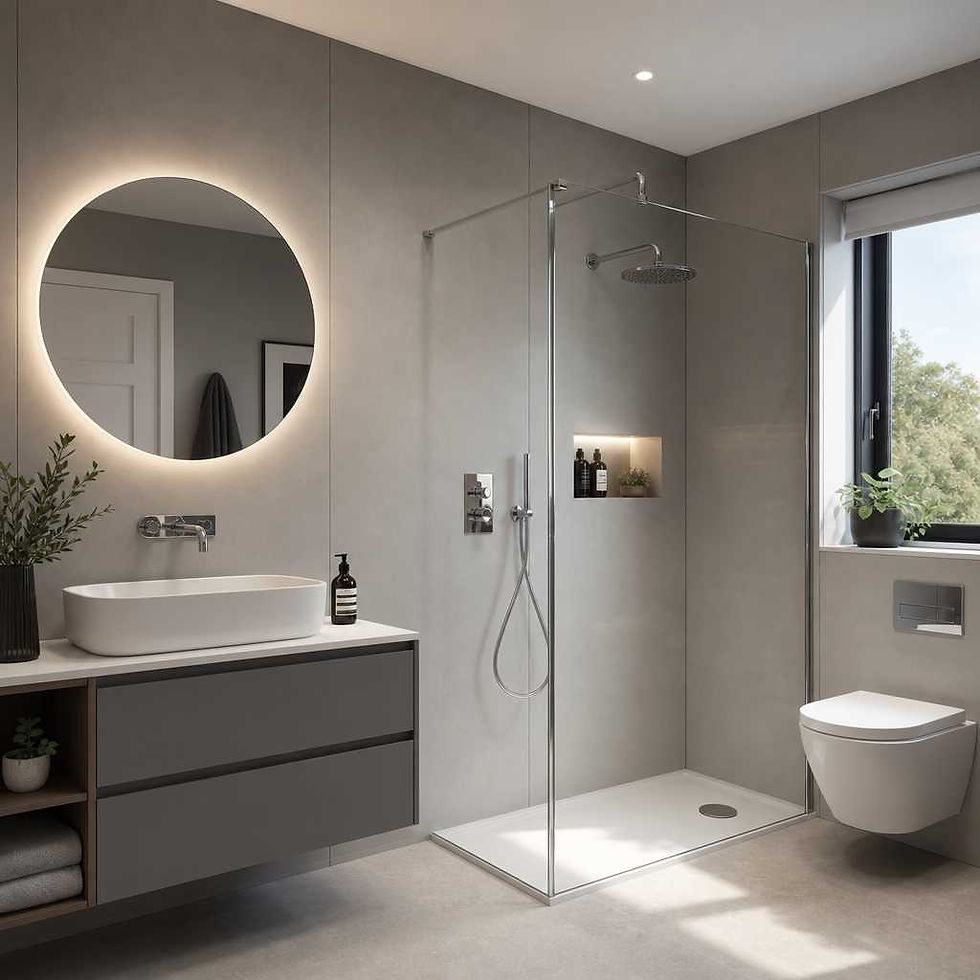

Maintenance is another strong point. Tiles require regular grout cleaning, occasional re-grouting, and prompt repair when a tile cracks. Panels need nothing more than a wipe-down with a non-abrasive cleaner. For busy households in Manchester or Warrington, that is a meaningful quality-of-life difference.
Aesthetically, wall panels have closed the gap on tiles significantly. High-resolution digital printing now allows manufacturers to produce panels that mimic Carrara marble, brushed concrete, and even realistic wood grain at a fraction of the material cost. You can achieve a bathroom that looks genuinely premium without paying premium tile prices.
Pro tip: If your bathroom has an existing extractor fan that is underperforming, fix the ventilation before fitting any wall surface, tiled or panelled. No surface material compensates for chronic condensation caused by inadequate airflow.
Types of Bathroom Wall Panels Available in the UK
PVC Tongue-and-Groove Panels
PVC tongue-and-groove panels are the most affordable option, typically ranging from £10 to £30 per square metre for materials. They are 100 percent waterproof, lightweight, and easy to cut, which keeps fitting costs down. The trade-off is that cheaper PVC panels can feel hollow underfoot when knocked and the range of finishes is more limited than acrylic or composite alternatives.
They are a solid choice for rental properties, secondary bathrooms, and budget renovations where durability and low maintenance matter more than a high-end aesthetic.
Acrylic Shower and Bath Panels
Acrylic panels are the mid-range option and they look noticeably better than standard PVC. They are available in gloss, matt, and textured finishes and the colour depth is richer. Material costs typically run from £30 to £70 per square metre. Acrylic is the most popular choice for bathroom fitting in Wigan and surrounding areas because it balances cost, aesthetics, and durability well.
The main limitation is scratch susceptibility. Acrylic surfaces can be scratched by abrasive cleaning products, so homeowners need to stick to soft cloths and mild cleaners.
Composite and Stone-Effect Panels
Composite panels, often with an MDF or rigid foam core and a decorative surface layer, are the premium end of the market. Stone-effect composite panels can cost £60 to £120 per square metre or more. They are heavier than PVC or acrylic, require a solid substrate, and need experienced fitting to ensure seams are invisible.
The result, when correctly installed, is a bathroom that is genuinely difficult to distinguish from natural stone, without the weight loading, sealing requirements, or price of actual stone.
Wall Panel vs Tile vs Wet Wall: A Direct Comparison
Homeowners often compare three options when planning a bathroom renovation: traditional ceramic or porcelain tiles, bathroom wall panels, and wet wall systems. Each has a clear use case, and the right choice depends on your budget, the bathroom's intended use, and how much maintenance you are willing to accept long-term.
Feature
Wall Panels (PVC or Acrylic)
Ceramic or Porcelain Tiles
Wet Wall Boards
Installation speed
1 day for a full bathroom
2 to 3 days minimum
1 to 2 days
Waterproofing
Fully waterproof, grout-free
Depends on grout integrity
Fully waterproof when sealed
Maintenance requirement
Wipe clean, no grout upkeep
Regular grout cleaning and periodic re-grouting
Wipe clean, minimal upkeep
Material cost (per sqm)
£10 to £120 depending on type
£15 to £150 plus adhesive and grout
£20 to £60
Finish quality
Good to excellent, wide range
Excellent, greatest design variety
Good, fewer decorative options
Suitability for older homes
High, can fit over existing tiles
Requires flat, sound substrate
Moderate, needs stable walls
Longevity with proper care
10 to 25 years
20 years plus if grout maintained
10 to 15 years
The data consistently shows that for the majority of UK bathroom renovations, wall panels offer the best combination of installation speed, waterproofing reliability, and long-term value. Tiles still win when a homeowner wants maximum design flexibility or is building a forever-home bathroom where cost per year over a 30-year horizon matters most.
"The UK home improvement market continues to prioritise low-maintenance, durable materials as homeowners factor long-term running costs into renovation decisions." - Insight from the UK Home Improvement Trends Report, cited by the Federation of Master Builders.
The Installation Process: What Actually Happens
Understanding what a professional wall panel bathroom installation involves helps you evaluate quotes accurately and avoid being undercharged by fitters who skip critical steps.
Step 1: Substrate Assessment and Preparation
Before a single panel is cut, the fitter must assess the walls. Are they flat? Are the existing tiles (if present) securely bonded? Is there any evidence of damp behind the plaster? Skipping this step is the most common cause of panel failure within the first two years.
If the existing wall surface is uneven, a layer of marine ply or moisture-resistant plasterboard is fixed first to create a flat, stable base. This adds time and cost but is non-negotiable for a quality result.
Step 2: Measuring, Cutting, and Fitting
Panels are measured and cut to length using a fine-tooth saw or a multi-tool. The fit needs to be precise. Gaps at edges, around windows, or where panels meet bath or shower trays will allow moisture ingress regardless of how much silicone sealant is applied later.
Panels are bonded using a solvent-free grab adhesive applied in a specific pattern to avoid air pockets, or they are mechanically fastened with trim strips. The two methods are not interchangeable and the choice depends on the panel type and wall substrate.
Step 3: Edging, Sealing, and Finishing
Corner trims, end caps, and H-section joining strips are fitted to all panel edges. Every junction where a panel meets a bath, shower tray, or floor is sealed with a high-quality sanitary silicone sealant. This is where many DIY attempts and budget fitters fall short. A poor silicone bead that peels within six months is worse than no sealant at all because it gives the appearance of being sealed when moisture is actually getting behind the panel.
Pro tip: Ask any bathroom fitter you are considering to show you the edge and corner finishing on a previous job before you book. The quality of the trim work tells you more about a fitter's standard than any photograph of a completed room.
Cost of Wall Panel Bathroom Installation in the North West
Costs vary based on bathroom size, panel type, and whether preparatory work such as plasterboard replacement is needed. As a general guide for bathroom installation in the North West, you should expect to pay the following for a standard family bathroom of approximately 5 to 8 square metres of wall coverage.
Budget PVC panel supply and fit: £400 to £700 including materials. Mid-range acrylic panel supply and fit: £800 to £1,400 including materials. Premium composite panel supply and fit: £1,500 to £2,500 including materials. These figures do not include the cost of any associated plumbing work, such as repositioning a shower, fitting a new bath, or replacing sanitaryware.
If you are combining bathroom installation with a boiler upgrade or central heating work, a company that handles both trades will almost always be more cost-effective than managing two separate contractors. This is exactly the kind of combined project Neptune Plumbing and Heating handles across Wigan, Bolton, Warrington, and Manchester.
Common Mistakes Homeowners Make with Wall Panels
A common mistake is choosing panels based on the lowest per-panel price without accounting for edge trim, adhesive, corner pieces, and waste. These additional costs can add 20 to 30 percent to the material budget. A quote that looks cheap on panels often makes up the margin on accessories or by omitting substrate preparation entirely.
Another frequent error is installing panels in rooms where the underlying damp problem has not been addressed. Panels will not fix a damp wall. They will seal moisture inside it, which causes structural damage over time. Any sign of efflorescence, staining, or soft plaster must be investigated and resolved before cladding the wall in anything.
Finally, homeowners sometimes choose panels for a bathroom that also serves as a utility room or has an exterior wall with inadequate insulation. In those cases, condensation can form on the cold wall behind the panel if it is not properly back-ventilated or insulated first. This is a detail that matters particularly in older terraced and semi-detached houses across Wigan and Bolton, where cavity wall insulation may be partial or absent.
Finding a Reliable Bathroom Fitter in Wigan and Beyond
The bathroom fitting market in the North West has a wide quality range. At one end are sole traders with a van and a limited portfolio. At the other end are established companies with full liability insurance, manufacturer training, and verifiable customer reviews across multiple platforms. The gap in quality between these two ends is significant, and it shows most clearly in how edge sealing, substrate preparation, and fixture alignment are handled.
When evaluating a bathroom fitter, check for the following without exception: Gas Safe registration if the work involves any gas appliances, liability insurance, a portfolio of completed jobs with named locations rather than anonymous stock photos, and clear written quotes that itemise materials separately from labour.
Neptune Plumbing and Heating covers bathroom installation across the North West, including Wigan, Warrington, Bolton, and Manchester, with a full guarantee on workmanship. As a family-run business with 24-hour emergency cover, they also handle the plumbing integration that a bathroom fit-out frequently requires, from waste connections to shower valve installation, without subcontracting it out to a third party.
The advantage of choosing a company that does both plumbing and bathroom fitting is that you have a single point of accountability if anything goes wrong. With two separate contractors, disputes about which trade caused a leak can leave a homeowner stuck in the middle with no resolution.
Frequently Asked Questions
Can wall panels be fitted over existing bathroom tiles?
Yes, in most cases wall panels can be bonded directly over existing ceramic or porcelain tiles, provided the tiles are flat, fully adhered to the wall, and there is no evidence of damp behind them. This is one of the most cost-saving aspects of wall panel bathroom installation because it eliminates the labour and waste disposal costs of tile removal. A fitter should still check that the total wall depth will not cause problems for switch boxes, window reveals, or bath edge clearances before proceeding.
How long does a wall panel bathroom installation take?
For a standard family bathroom, wall panel installation typically takes one full working day for an experienced fitter, assuming the substrate is in good condition and no preparatory work is needed. If marine ply or moisture-resistant board needs to be fixed first, add half a day to a full day for that work. This compares favourably to a tiled bathroom, which usually requires two to three days minimum plus drying time before the room can be used.
Are wall panels suitable for shower areas?
Fully waterproof PVC and acrylic wall panels are well suited for shower enclosures and are often a better choice than tiles in that specific application because there are no grout lines to fail under constant water exposure. The critical requirement is correct edge sealing where the panel meets the shower tray and any internal corners. This must be done with a sanitary silicone sealant rated for wet room use, not standard decorators' caulk.
What is the difference between bathroom wall panels and wet wall boards?
Bathroom wall panels typically refer to tongue-and-groove or large-format interlocking panels made from PVC or acrylic. Wet wall boards are thicker, rigid sheets (usually 10 to 12mm) made from PVC or composite materials, designed to be cut and fitted in fewer, larger sections. Wet wall boards often look more seamless on large flat walls but require more precise cutting around fixtures. Wall panels in the tongue-and-groove format are faster to fit around awkward spaces. Both are fully waterproof when correctly installed.
Do wall panels add value to a UK home?
A well-fitted bathroom with quality wall panels absolutely contributes to property value, particularly when compared to a bathroom with cracked, stained, or outdated tiles. According to research referenced by Rightmove and Zoopla, updated bathrooms consistently rank among the top three improvements that influence UK buyer decisions. The key factor is quality of finish. Panels fitted cleanly with good trim and matched sanitaryware read as a modern, maintained bathroom to prospective buyers.
Can I install bathroom wall panels myself or do I need a professional?
PVC tongue-and-groove panels are within the capability of a competent DIY enthusiast for a small bathroom with simple walls. However, any job involving substrate preparation, fitting around built-in baths or shower trays, or premium composite panels should be handled by a professional fitter. Poor edge sealing or incorrect adhesive application causes panel failure that is expensive to rectify. For bathroom installation in Wigan and the wider North West, using a professional fitter also means the work is covered by a workmanship guarantee.
What has been your experience with wall panels in your own bathroom? Share your thoughts or questions below and we will answer them directly.


Comments