


Condensing Boiler Installation: Why Leigh Homes Need One
- Michael Beresford
- 3 days ago
- 11 min read
If your energy bills have crept up every winter and your old boiler groans to life each morning, you are not imagining the problem. Older non-condensing boilers waste up to 30% of the fuel they burn, releasing heat straight out of the flue and into the atmosphere. A condensing boiler installation fixes that by recovering heat that would otherwise be lost, achieving efficiency ratings above 90%. For homeowners in Leigh and across Wigan, that difference translates directly into lower gas bills and a warmer home. This article explains exactly how condensing boilers work, what makes them the right choice for North West homes, and what to expect from a professional installation.
Table of Contents
Quick Takeaways
Key Insight
Explanation
Condensing boilers are legally required for new installations in England
Since 2005, UK Building Regulations require all new gas boiler installations to be high-efficiency condensing models.
Efficiency ratings exceed 90%
Modern condensing boilers convert more than 90p of every £1 of gas into usable heat, compared to around 70-80% for older non-condensing units.
The secondary heat exchanger is what sets them apart
A second heat exchanger recovers latent heat from flue gases, which would otherwise escape unused into the air.
Annual savings for Leigh homeowners can reach £300 or more
The Energy Saving Trust estimates that replacing a G-rated boiler with a modern condensing model saves a typical semi-detached home £300 or more per year.
Incorrect sizing causes efficiency losses regardless of boiler type
An oversized condensing boiler short-cycles, reducing efficiency. A Gas Safe engineer must calculate the correct output for your home's heat loss.
The white plume from the flue is a sign it is working correctly
The water vapour condensate pluming from the flue is normal and indicates the boiler is recovering heat as designed.
Condensate pipe freezing is the most common winter fault in the North West
Cold winters in Leigh and Wigan mean external condensate pipes can freeze. Proper insulation at installation prevents this entirely.
What Is a Condensing Boiler?
A condensing boiler is a gas-fired heating appliance that uses two heat exchangers instead of one. The primary heat exchanger works exactly as in any conventional boiler, transferring heat from burning gas to the water in your central heating circuit. The secondary heat exchanger then captures the residual heat from the flue gases before they leave the appliance, cooling those gases enough that the water vapour within them condenses into liquid. That condensate drains away harmlessly through a pipe, and the recovered heat goes back into your home.
In practice, this process pushes efficiency ratings to 90% and above. The ErP (Energy-related Products) rating system used across the UK grades condensing boilers at A-rated or above. Older non-condensing boilers typically sat at D, E, or F ratings. That gap is not marginal; it is structural.
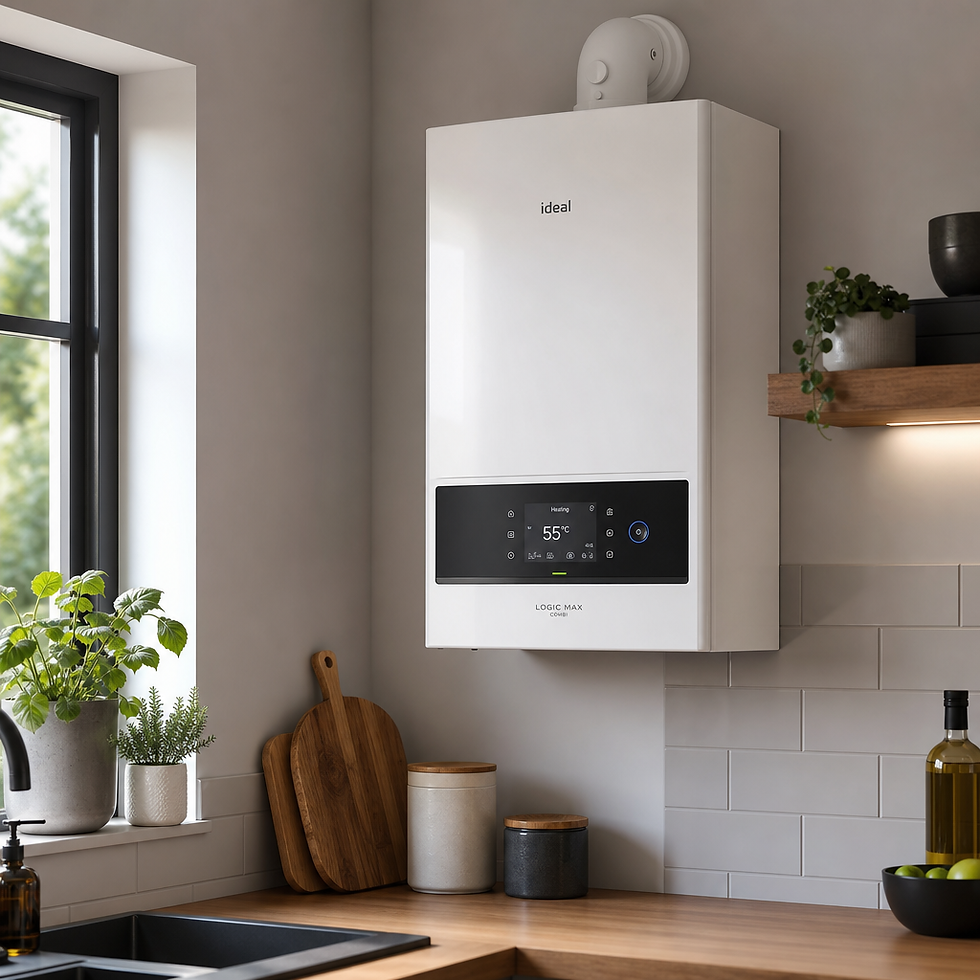
The term "condensing" refers specifically to this condensate formation process, not to any particular brand or model. Worcester Bosch, Vaillant, Ideal, and Baxi all manufacture condensing boilers. What differs between manufacturers is build quality, warranty length, and the reliability data built up over years of field installations.

How Condensing Boilers Differ from Older Models
The single biggest technical difference is the secondary heat exchanger and the lower return temperature requirement that comes with it. A non-condensing boiler operates with return water temperatures around 70 degrees Celsius or higher. At those temperatures, the flue gases cannot cool enough to condense, so latent heat is wasted. A condensing boiler is designed to work with return temperatures of 55 degrees Celsius or lower, which is where the condensing process becomes active and efficiency climbs.
Why Older Boilers Are Simply Not Efficient Enough for Modern Homes
Boilers installed before 2005 in homes across Leigh and Wigan are almost certainly non-condensing. Many are at or beyond their design lifespan of 10 to 15 years. A boiler operating at 75% efficiency means 25p in every £1 spent on gas exits through the flue as wasted heat. With gas prices remaining well above the lows seen before 2021, that waste has become genuinely expensive.
Non-condensing boilers also use a standing pilot light in many older models, burning gas continuously even when no heating or hot water is needed. Modern condensing boilers use electronic ignition, eliminating that constant background gas consumption entirely.
The Flue and Condensate Pipe Differences
One practical difference you will notice during installation is the addition of a condensate pipe. This white plastic pipe carries acidic condensate water from the boiler to an internal drain or, where necessary, externally. In the North West, Neptune Plumbing and Heating always recommends routing the condensate pipe internally wherever possible, because external pipes are vulnerable to freezing during the cold winters that Leigh and Wigan regularly experience. A frozen condensate pipe is the single most common cause of boiler lockout calls we receive in January and February.
Pro tip: When booking your condensing boiler installation, specifically ask your installer about condensate pipe routing. If they plan to run it externally without discussing insulation, push back. An internal or well-insulated route takes slightly more effort during installation but prevents emergency callouts in winter.
Energy Efficiency and Cost Savings for Leigh Homeowners
The Energy Saving Trust, which operates under government mandate in the UK, estimates that replacing a G-rated non-condensing boiler with a modern A-rated condensing model saves a typical semi-detached home approximately £300 per year on gas bills. For a detached home, that figure rises. These estimates use average household gas consumption figures and current energy price data, and they are conservative rather than optimistic.
Homes in Leigh, Wigan, and across the North West tend to be older housing stock, including Victorian terraces, 1930s semis, and post-war builds. Many of these properties have benefited from cavity wall insulation and loft insulation upgrades over the years, which reduces overall heat demand. A condensing boiler pairs particularly well with improved insulation because lower heat demand means the boiler operates at lower flow temperatures more often, keeping it in condensing mode for longer periods and pushing real-world efficiency closer to the rated figure.
The Relationship Between Flow Temperature and Real-World Efficiency
This is where many homeowners and, frankly, some installers go wrong. A condensing boiler's rated efficiency is measured under specific laboratory conditions. In a real home, efficiency depends heavily on the flow temperature setting. Many installers set flow temperatures at 70-75 degrees Celsius out of habit, which means the boiler spends much of its operating time in non-condensing mode.
The data consistently shows that reducing flow temperatures to 55 degrees Celsius or lower, and compensating with weather compensation controls, increases real-world efficiency significantly and reduces annual gas consumption. This does require that your radiators are sized correctly for lower temperatures. Neptune Plumbing and Heating's installation process includes a review of your existing radiator sizing to ensure the system is optimised, not just the boiler itself.
"Heating accounts for around 55% of what you spend in a year on energy bills, so an efficient boiler makes a big difference." - Energy Saving Trust, UK government-backed consumer energy advice body.
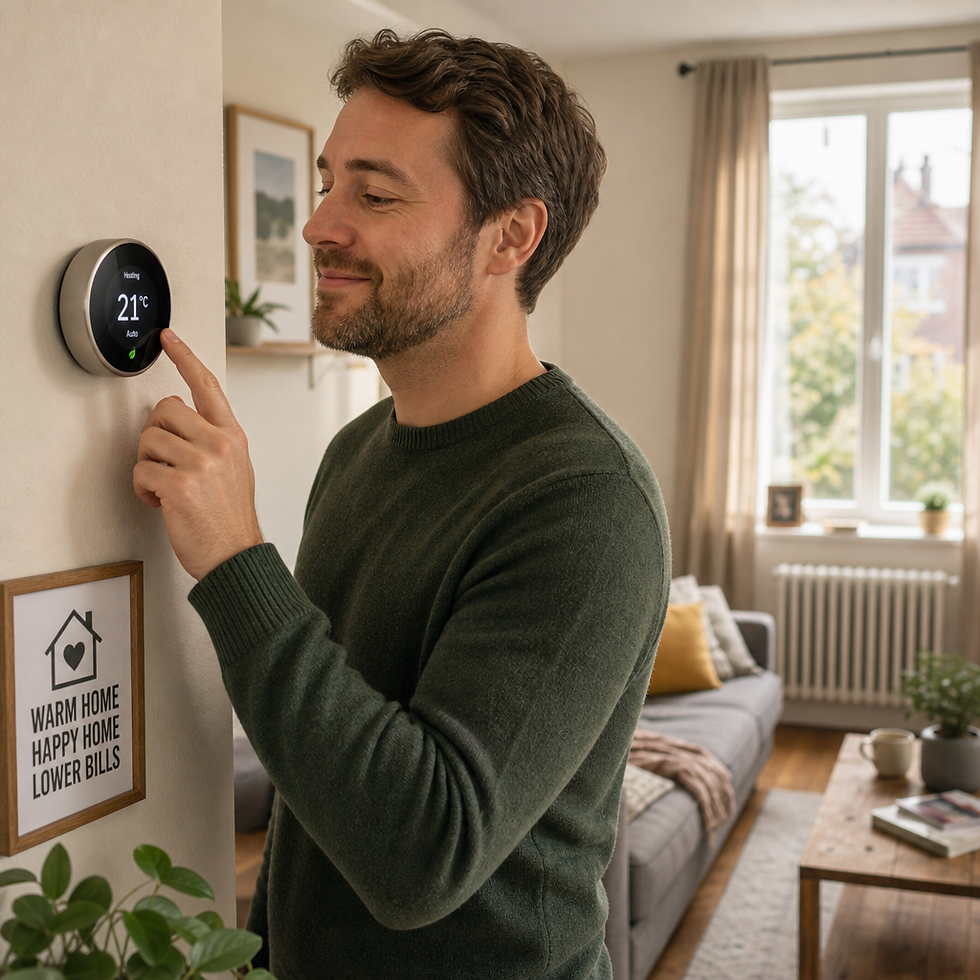
Pro tip: After your condensing boiler installation, ask your engineer to set the weather compensation curve correctly for your home rather than leaving the flow temperature at the factory default. This single adjustment can shave a further 8-12% off your annual gas bill without any additional cost.
Types of Condensing Boiler: Combi, System, and Regular
All new gas boilers installed in the UK are condensing boilers by law. The choice you actually face is which type of condensing boiler suits your home. There are three main configurations, and selecting the wrong one is a common and costly mistake.
Combi Condensing Boilers
A combi (combination) boiler provides both central heating and instantaneous hot water without needing a separate hot water cylinder or cold water storage tank. This makes them ideal for smaller homes and flats where space is limited. In Leigh and across Wigan, many terraced properties and two-bedroom semis are well suited to a combi. The limitation is hot water flow rate: if two showers run simultaneously in a larger home, pressure and temperature can drop noticeably.
System Condensing Boilers
A system boiler works with a separate hot water cylinder but does not require a cold water tank in the loft. This suits larger homes with higher hot water demand, or homes where water pressure from the mains is insufficient for a combi. The stored hot water cylinder means multiple outlets can draw hot water simultaneously without pressure loss.
Regular (Heat-Only) Condensing Boilers
A regular boiler requires both a hot water cylinder and a cold water storage tank, typically in the loft. These are most commonly a like-for-like replacement in older properties that already have this configuration. Replacing a regular boiler with a combi requires additional pipework changes and is not always the most cost-effective route, particularly in larger detached homes with high hot water demand.
Neptune Plumbing and Heating carries out a full property survey before recommending which type suits your home. Getting this decision right at the start saves significant expense down the line.
What a Professional Boiler Installation in Wigan Involves
A boiler installation in Wigan from a qualified Gas Safe registered engineer is not simply a case of swapping one appliance for another. The process, done properly, covers assessment, installation, commissioning, and aftercare.
Pre-Installation Survey
Before any work begins, a competent engineer will assess your existing heating system, the condition of your pipework and radiators, the gas supply pressure and meter capacity, and your home's hot water demand. This is also when the condensate pipe route is planned, the flue position is confirmed, and any system cleaning requirements are identified.
System Flushing and MagnaClean Filters
A common mistake is fitting a new condensing boiler to an old, sludge-filled central heating system. Black iron oxide sludge accumulates in older systems and causes premature heat exchanger failure in a new boiler. A thorough power flush or chemical flush before installation, combined with fitting a magnetic filter such as a Fernox TF1 or Adey MagnaClean, protects the investment in the new boiler.
Most manufacturers, including Worcester Bosch, require evidence of a system filter to validate the full warranty. Skipping this step is not just bad practice; it can void your warranty from day one.
Commissioning and Building Regulations Notification
Once installed, the boiler must be commissioned according to the manufacturer's specifications. This includes setting the correct flow temperature, checking gas pressure and combustion readings, and completing the Benchmark commissioning checklist. For boiler installations in Wigan and across Greater Manchester, the installation must also be notified to Building Control, which Gas Safe registered engineers can do via a Competent Persons scheme. Neptune Plumbing and Heating handles all notifications as standard.
Condensing vs Non-Condensing vs Heat Pump: A Direct Comparison
Homeowners sometimes ask whether they should consider an air source heat pump instead of a condensing boiler. The honest answer is that for most existing homes in Leigh and Wigan right now, a condensing gas boiler remains the most practical and cost-effective choice. Here is why.
Factor
Modern Condensing Gas Boiler
Non-Condensing Gas Boiler (Pre-2005)
Air Source Heat Pump
Typical Efficiency
90-98% (ErP A-rated)
70-80%
250-350% (COP of 2.5-3.5 using electricity)
Installation Cost (typical UK semi-detached)
£1,500-£3,500
No longer legally available for new install
£8,000-£15,000 before grant
Compatibility with Existing Radiators
High. Existing radiators usually adequate
N/A
Low. Often requires larger radiators or underfloor heating
Running Costs (average North West home)
Lower than pre-2005 boiler by up to £300 per year
Highest gas consumption
Depends on electricity tariff. Can be comparable or higher
Installation Disruption
1-2 days typically
N/A
Multiple days, external unit required
Regulatory Requirement
Mandatory for all new gas boiler installs since 2005
Banned for new installations
Eligible for Boiler Upgrade Scheme grant (£7,500)
Heat pumps are a viable long-term direction for the UK housing stock, but they require well-insulated homes and significant upfront investment. For a homeowner in Leigh with a 1950s semi and existing radiators, a condensing combi or system boiler installation delivers immediate, proven savings without the disruption and cost of a full heating system overhaul.
Common Mistakes Homeowners Make When Choosing a Boiler
After carrying out boiler installations across Leigh, Wigan, Bolton, Warrington, and Manchester, the same errors come up repeatedly. Knowing them in advance saves money and frustration.
Choosing the Cheapest Boiler Rather Than the Best Value
Budget boilers from lesser-known brands often carry only two-year warranties and have limited parts availability. Worcester Bosch and Vaillant cost more upfront but offer 10-year warranties when installed by an accredited engineer and carry parts availability that lasts decades. The cheapest boiler installed today may cost more in repair bills within five years than a quality boiler would have cost upfront.
Ignoring the Existing System Condition
Fitting a new condensing boiler to a contaminated system is one of the most common reasons new boilers fail prematurely. Always insist on a power flush and magnetic filter installation as part of the job. If an installer quotes you a very low price and does not mention system cleaning, ask directly whether it is included.
Not Checking Gas Safe Registration
Any engineer installing a gas boiler in the UK must be Gas Safe registered. This is a legal requirement, not a preference. You can verify any engineer's registration at the Gas Safe Register website before they start work. An unregistered installation is illegal, dangerous, and will invalidate your home insurance. Neptune Plumbing and Heating's Gas Safe registration details are available to any customer on request.
A common mistake is assuming that a low quote means the job is straightforward. In most cases, a significantly lower quote means something important has been omitted, whether that is the system flush, the filter, the correct commissioning process, or the Building Regulations notification.
Frequently Asked Questions
What is the lifespan of a condensing boiler?
A well-maintained condensing boiler from a reputable manufacturer has a typical lifespan of 10 to 15 years. Some Worcester Bosch and Vaillant models regularly exceed 15 years when serviced annually and installed into a clean heating system. Annual servicing is the single most important factor in longevity, and it is also required by most manufacturers to maintain the warranty.
Do condensing boilers work in older houses in Leigh and Wigan?
Yes, and they are the legally required option for any new installation regardless of house age. Older properties in Leigh, including Victorian terraces and 1930s semis, are entirely compatible with condensing boilers. The main consideration is ensuring radiators are adequate for slightly lower flow temperatures and that the condensate pipe is routed appropriately for the property layout.
Why does my new condensing boiler produce a white cloud from the flue?
The white plume is water vapour from the condensed flue gases. It is a sign the boiler is working exactly as designed, recovering latent heat from the exhaust gases. It is harmless and should not be confused with smoke. Non-condensing boilers do not produce this visible plume because their flue gases remain too hot to condense.
How much does a condensing boiler installation cost in Leigh or Wigan?
For a straightforward combi condensing boiler replacement in a semi-detached home in Leigh or Wigan, expect to pay between £1,800 and £3,000 fully installed including parts, labour, system flush, filter, and commissioning. Larger homes needing system boilers, or properties requiring significant pipework changes, will be at the higher end. Neptune Plumbing and Heating provides fixed price quotes so there are no surprises on completion.
Is there any financial help available for a new boiler in the North West?
The UK government's Energy Company Obligation (ECO4) scheme provides funding for boiler replacements and heating upgrades for eligible low-income households. Eligibility is based on household income and benefit status. The Great British Insulation Scheme also runs alongside ECO4. Neptune Plumbing and Heating can advise on eligibility during your initial survey visit. For heat pump installations, the Boiler Upgrade Scheme offers a £7,500 grant, though this requires a more substantial property assessment.
How long does a condensing boiler installation take?
A like-for-like combi boiler replacement in a typical Leigh or Wigan home takes one full working day for an experienced team. If the job involves changing boiler type, for example from a regular boiler to a combi, or if significant pipework modifications are needed, the job typically takes two days. Neptune Plumbing and Heating schedules installations to minimise the time you are without heating and hot water.
Have you recently replaced your boiler with a condensing model, or are you still weighing up your options? Share your experience or questions in the comments and the Neptune Plumbing and Heating team will respond directly.


Comments