


Copper vs Plastic Pipes: Best Choice for North West Homes
Most North West homeowners only think about their pipes when something goes wrong. By that point, a small question about materials has turned into an emergency callout, a ruined floor, or a boiler that won't fire properly. If you're planning a pipe replacement in Wigan, a bathroom renovation in Bolton, or a full boiler installation in Manchester, the choice between copper pipes vs plastic pipes matters more than most people realise. It affects how long your plumbing lasts, how much you pay upfront, and how well your system handles the specific water conditions across the North West. This guide gives you a straight answer based on real-world plumbing work, not showroom theory.
Table of Contents
Quick Takeaways
Key Insight
Explanation
Water in Wigan and surrounding areas is slightly hard
Wigan averages around 116 ppm, meaning limescale does build up over time, which affects both copper and plastic push-fit fittings.
Copper lasts longer in ideal conditions
Medium-grade copper pipe (L-type) can last 50 to 100 years. This makes it a strong long-term investment in exposed or high-traffic areas.
Plastic is cheaper and faster to fit
PEX and push-fit plastic pipe requires fewer tools and less installation time, which reduces labour costs on large plumbing jobs.
Plastic handles freezing conditions better
Plastic has better expansion and contraction properties than copper, making it less likely to burst during a North West cold snap.
Copper is the right choice for exposed pipework
Visible runs to radiators, taps, and boiler connections look far neater in copper, and the material handles high temperatures reliably.
Plastic suits hidden, long-run work
Under floors and inside walls, PEX pipe can be curved with fewer joints, reducing the number of potential leak points in the system.
Most professional plumbers use both
A hybrid installation uses copper where it's visible and plastic where it's hidden, combining the best of both materials in one system.
What Makes North West Plumbing Different
Plumbing pipes don't perform in a vacuum. The material you choose needs to suit your local water supply, your climate, and the age and style of your property. In Wigan, Leigh, Warrington, Bolton, and Manchester, those factors have a particular character that directly influences the copper vs plastic decision.
Water hardness across the North West is lower than most of England. United Utilities, which supplies the region, draws the majority of its raw water from upland surface water reservoirs, and that water is typically soft or very soft. Wigan sits at around 116 ppm, classed as slightly hard. Manchester comes in around 54.7 mg/l of calcium carbonate, which is moderately soft. This is genuinely good news for copper pipes: the aggressive scaling that shortens copper lifespans in the south of England is far less of a problem here.
That said, limescale does still accumulate in both copper and plastic push-fit fittings over time. A compression joint that was watertight on installation can start to weep years later when limescale gradually weakens the seal. This applies regardless of pipe material, and it is one of the reasons why professional installation with correctly rated fittings matters so much in this region.
The North West also has a large housing stock of Victorian and Edwardian terraces, particularly across Leigh, Wigan, and Bolton. Many of those properties still have original or early-replacement copper pipes running under the floorboards. When those pipes need work, the material question becomes live again.
Pro tip: If you are buying or renovating an older property in the Wigan or Leigh area, ask a qualified plumber to check whether any original lead pipework is still present in the system. Lead pipes are a health hazard and should be replaced immediately, regardless of which material you choose for the rest of the installation.


Copper Pipes: Strengths and Weaknesses
Copper has been a staple of UK household plumbing since the 1920s, and it earned that position for good reasons. Understanding exactly what those reasons are, and where copper falls short, helps you decide where to use it in your home.
Where Copper Genuinely Excels
Longevity is copper's strongest card. Medium-thickness L-type copper pipe can last between 50 and 100 years. The thicker K-type copper used in some commercial applications can exceed 100 years. Even the thinnest M-type residential copper is rated for 20 to 50 years. No plastic pipe currently comes close to those upper numbers under optimal conditions.
Copper is also the material of choice for exposed pipework. When pipes run visibly along a bathroom wall, connect to a radiator in a living room, or link to a boiler in a utility room, copper looks professional and can even be polished or lacquered to become a design feature. Plastic push-fit pipe in a visible location rarely looks as clean or finished.
For boiler and radiator connections specifically, copper handles high temperatures without question. The material does not degrade when carrying hot water repeatedly at the temperatures a central heating system generates, making it the reliable standard for those connections.
Where Copper Has Real Limitations
The main drawback is cost. Copper pipe costs significantly more than plastic equivalents per metre, and copper installation typically requires more skilled labour time because soldering joints is a slower process than snapping push-fit plastic connectors together. For a large installation with long pipe runs, that difference in labour and materials adds up quickly.
Copper also expands and contracts more rigidly than plastic. In extreme cold, copper pipes carrying water that has frozen are more vulnerable to splitting than their flexible plastic counterparts. This matters in properties that are left unheated for extended periods during winter, a real consideration for landlords and second-home owners in the region.
In areas with genuinely acidic water, copper can develop pinhole corrosion over time. The North West's water supply is generally not aggressive enough for this to be a common problem locally, but it is worth flagging for any property drawing from a private borehole with unusual water chemistry.
Plastic Pipes: Strengths and Weaknesses
Plastic plumbing pipe has appeared in UK residential properties since the early 1960s, and PEX (cross-linked polyethylene) is now the most widely used plastic pipe type in British homes. It has real advantages, but it also has genuine limitations that are sometimes glossed over.
The Case for Plastic in North West Homes
Cost and speed of installation are plastic's headline advantages. Plastic is cheaper per metre than copper, and push-fit connections snap together without a blowtorch or specialist soldering skills. On a large job with significant pipe runs, this translates into lower overall installation costs for the homeowner.
Flexibility is a practical advantage that often gets underestimated. PEX pipe can curve around obstacles, meaning fewer joints are needed across a long run. Every joint is a potential leak point. Fewer joints under your floorboards or inside your walls means fewer things that can go wrong over time. For this reason, plastic is particularly well suited to underfloor heating systems, where oxygen-barrier PEX is the standard professional choice.
Plastic also handles freeze-thaw cycles better than copper. Its expansion and contraction properties give it more resilience when water inside a pipe freezes, reducing the risk of a burst pipe during a cold North West winter.
From a scaling perspective, plastic pipe does not react chemically with water and minerals the way metal does. This makes it marginally more resistant to the kind of internal buildup that can, over many years, restrict water flow in copper pipes.
Where Plastic Falls Short
The lifespan of plastic pipe is shorter than the best grades of copper. PEX is generally rated for 40 to 50 years, though well-installed plastic push-fit systems can perform well beyond that under good conditions. The top end of copper longevity remains out of plastic's reach.
Plastic pipe cannot be used in situations where it will be exposed to UV radiation without protection, and it should not be used for the immediate connections to boilers and stoves. The heat tolerance of plastic, while adequate for normal domestic hot water temperatures, is not a match for copper in direct high-heat applications. In practice, this means copper short-runs are almost always needed at the boiler itself, even in an otherwise all-plastic system.
Pro tip: When booking any pipe replacement or central heating installation in the Leigh or Wigan area, ask your plumber specifically whether push-fit fittings will be used under concrete floors or in areas with restricted access. In those locations, a leak from a push-fit connection is far harder and more expensive to fix than a soldered copper joint. The upfront cost difference is worth paying for peace of mind.

Copper vs Plastic: Side-by-Side Comparison
The table below compares the three most common pipe types used in North West homes today: copper, PEX (plastic), and a hybrid combination of both. These are not abstract categories - they are the actual choices your plumber will discuss with you when planning a job.
Feature
Copper Pipe
PEX Plastic Pipe
Hybrid (Copper + PEX)
Typical lifespan
50 to 100+ years (L/K-type)
40 to 50 years
Depends on section; copper sections can outlast plastic
Installation cost
Higher (materials and labour)
Lower (cheaper materials, faster to fit)
Mid-range; optimised for each area
Appearance
Professional, suitable for exposed runs
Not suitable for visible pipework
Copper used where visible; plastic hidden
Freeze resistance
Lower; more likely to split if frozen
Higher; flexible enough to absorb expansion
Plastic used in vulnerable areas
Boiler/radiator connections
Ideal; handles high heat without issue
Not recommended for direct connection
Copper used at heat sources as standard
Scaling (North West water)
Minor risk at 116 ppm (Wigan); manageable
Minimal risk; does not react with minerals
Both perform well in North West conditions
Best use in North West homes
Exposed runs, boiler connections, visible bathroom pipework
Underfloor heating, hidden long runs, loft work
Most full-home plumbing or central heating installations
The Hybrid Approach: What Professional Plumbers Actually Do
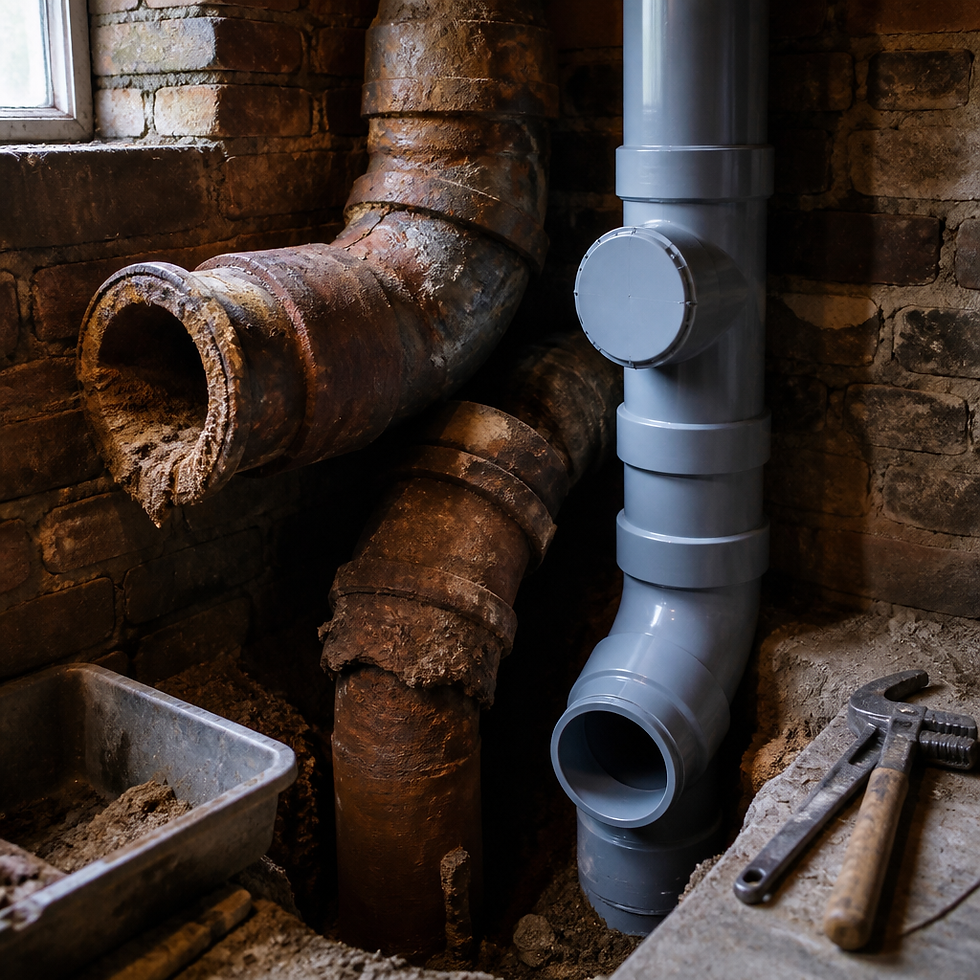
If you ask an experienced plumber what they actually install in a full house replumb or central heating job, the honest answer is: both. A purely copper system is expensive. A purely plastic system creates problems at heat sources and looks poor where pipes are visible. The hybrid approach solves both problems by using each material where it performs best.
In practice, this means copper at the boiler, at the radiator connections, and anywhere the pipe is in view. Plastic runs under the floors and through the walls, where the long flexible runs can be bent around joists and through cavities with fewer joints than copper would need. The changeover between materials uses standard transition fittings that any qualified plumber carries as a matter of course.
The right combination of copper and plastic pipes gives you a clean, low-maintenance system - copper where it counts for appearance and heat tolerance, plastic where it counts for speed and flexibility.
This is not a compromise. It is actually the most technically sound approach to domestic plumbing installation. The materials are fully compatible when joined with correctly rated fittings, and the combination takes advantage of what each does well.
For North West homeowners specifically, the hybrid approach works particularly well for central heating upgrades. When a new boiler is being installed in a Leigh semi-detached or a Bolton terrace, the flow and return pipes to the boiler run in copper, the manifold connections and longer hidden runs use PEX, and the radiator tails finish in copper again. The result is a system that is durable, leak-resistant, and looks professional wherever it is seen.
If you are having a boiler installation or a full central heating system fitted in the North West, ask your engineer to explain which material they are using in each section of the installation and why. A good plumber will have a clear reason for every choice. If the answer is simply "we always use one or the other," that is a sign the specification has not been thought through for your specific property.
When to Replace Your Pipes: North West Warning Signs
Knowing which pipe material is better does not help much if you don't know when your existing pipes need attention. In older properties across Wigan, Leigh, and the wider North West, there are clear signs that a pipe replacement conversation with a plumber is overdue.
Discoloured water from the hot tap is one of the most reliable warning signs. It usually indicates internal corrosion or sediment in ageing copper pipes, and it should not be left. Brownish or rust-tinted water from cold taps in an older property can point to galvanised steel pipework that has degraded beyond acceptable limits.
Persistent low water pressure across multiple outlets, unexplained damp patches on ceilings or floors, and the sound of water running when no taps are open all indicate that a plumbing inspection is needed. A qualified plumber can trace and diagnose these problems without tearing out walls unnecessarily. For emergencies, a 24-hour emergency plumber can locate and fix a burst pipe before secondary damage sets in.
Properties built before the 1970s may still contain lead supply pipes, particularly on the section between the street main and the internal stopcock. Lead is hazardous and should be identified and replaced as a priority, regardless of what material is used for the rest of the plumbing system. United Utilities can sometimes advise on whether a property's external supply line has already been upgraded.
For planned bathroom installations or central heating upgrades, a pipe survey before work begins identifies whether the existing pipework is in good enough condition to remain, or whether a partial or full replacement is the more economical long-term decision. Replacing corroded pipes during a planned renovation costs a fraction of what it costs after walls are replastered and floors are relaid.
Pro tip: If your property is a 1930s to 1970s build in Leigh, Wigan, or Bolton, check when the central heating system was last fully replaced. Copper pipes from that era may be approaching the end of their reliable service life. A simple pressure test by a qualified plumber will tell you whether you have years left in the system or whether you are due for a replacement job in the near term.
Frequently Asked Questions
Is copper or plastic pipe better for a new boiler installation in the North West?
For a new boiler installation, copper is the right choice for the connections immediately at the boiler itself. Copper handles the sustained high temperatures that a boiler generates reliably and without degradation. Plastic pipe can be used for the longer runs away from the boiler, making a hybrid approach the most sensible and cost-effective specification for most North West properties.
Will the slightly hard water in Wigan damage my copper pipes?
At around 116 ppm, Wigan's water is classified as slightly hard, but this is mild compared to many areas of England. The North West's water supply is generally soft to very soft, drawn from upland reservoirs by United Utilities. Limescale does accumulate slowly in both copper and plastic push-fit fittings over time, but at local water hardness levels, it is manageable with regular boiler servicing and system inhibitor maintenance rather than a reason to avoid copper entirely.
How long will plastic PEX pipes last in a North West home?
PEX pipe is generally rated for around 40 to 50 years. Well-designed and correctly installed plastic push-fit systems can perform well beyond that in some cases. The key factors are quality of installation, water temperature, and whether the pipe is used within its rated specifications. For underfloor heating systems and long hidden runs, PEX is an excellent long-term choice in the North West's relatively mild water conditions.
Can I mix copper and plastic pipes in the same plumbing system?
Yes, and in fact most professional plumbers in the North West do exactly this. The two materials are fully compatible when connected with correctly specified transition fittings. Copper is used at heat sources and in visible locations; plastic is used for hidden long runs and flexible sections. There is no performance or safety issue with mixing the two, and the hybrid approach is widely considered best practice for full-home plumbing installations.
What are the signs that I need pipe replacement in my Wigan or Leigh home?
The most common signs are discoloured water from the hot tap, reduced water pressure across multiple outlets, damp patches appearing on ceilings or walls with no obvious source, and the sound of water running when nothing is turned on. In older properties built before the 1970s, the additional risk of lead supply pipes means a plumbing inspection is worth doing proactively. A qualified plumber can assess the system quickly and tell you whether repair or replacement is the better option.
Is it worth paying more for copper pipes if I'm on a budget?
It depends on where the pipe is going. For exposed or accessible runs where appearance matters, or for connections to boilers and radiators, copper is worth the extra cost for its longevity and professional finish. For long hidden runs under floors and through walls where the pipe will never be seen, plastic PEX is a sound and cost-effective choice. Spending the budget where it matters, and saving on hidden runs, is a sensible approach for most homeowners.
Have you recently had copper or plastic pipes fitted in your North West home, or are you weighing up a pipe replacement job right now? Share your experience or questions in the comments below.
References
WaterSafe UK: Advantages and disadvantages of copper and plastic pipes in domestic plumbing
Homebuilding and Renovating: Expert comparison of copper and plastic pipe types for UK homes
United Utilities: Water hardness information for the North West England region
WaterHard UK: Water hardness data for the Wigan area by postcode
TM Hughes and Son: Practical guide to copper vs plastic pipes for residential plumbing


Comments